
On This Page
The U.S. legal services market is growing, with demand higher than ever before and more innovations just around the corner.
It’s never been more important to stay up to date with law firm statistics for valuable insights and informed decision-making in your practice.
We get into a selection of the most compelling statistics highlighting the trends to be across below, but first, a couple of important notes:
- This post mainly includes verified law firm statistics from the past 2-3 years.
- Any statistics garnered from before 2023 are flagged in our post.
- Many marketing blogs repeat general stats rather than citing original surveys. This post does not include such statistics, to the best of our knowledge.
Please use our graphics freely in your content but if you do so, please remember to link to this page.
According to Clio’s most recent Legal Trends report, more than half (57%) of potential legal clients have or would consider using AI to answer their legal questions, with younger generations more likely to use AI in this way (indicating a growing trend).
The most common legal questions answered by AI involve:
- Legal requirements or terms
- Constitutional rights
- Housing
- Employment
- Contract review
- Hiring a lawyer, etc.
Law firms, too, are increasingly using AI tools in all aspects of their practice. So, let’s explore this trend with some key statistics:
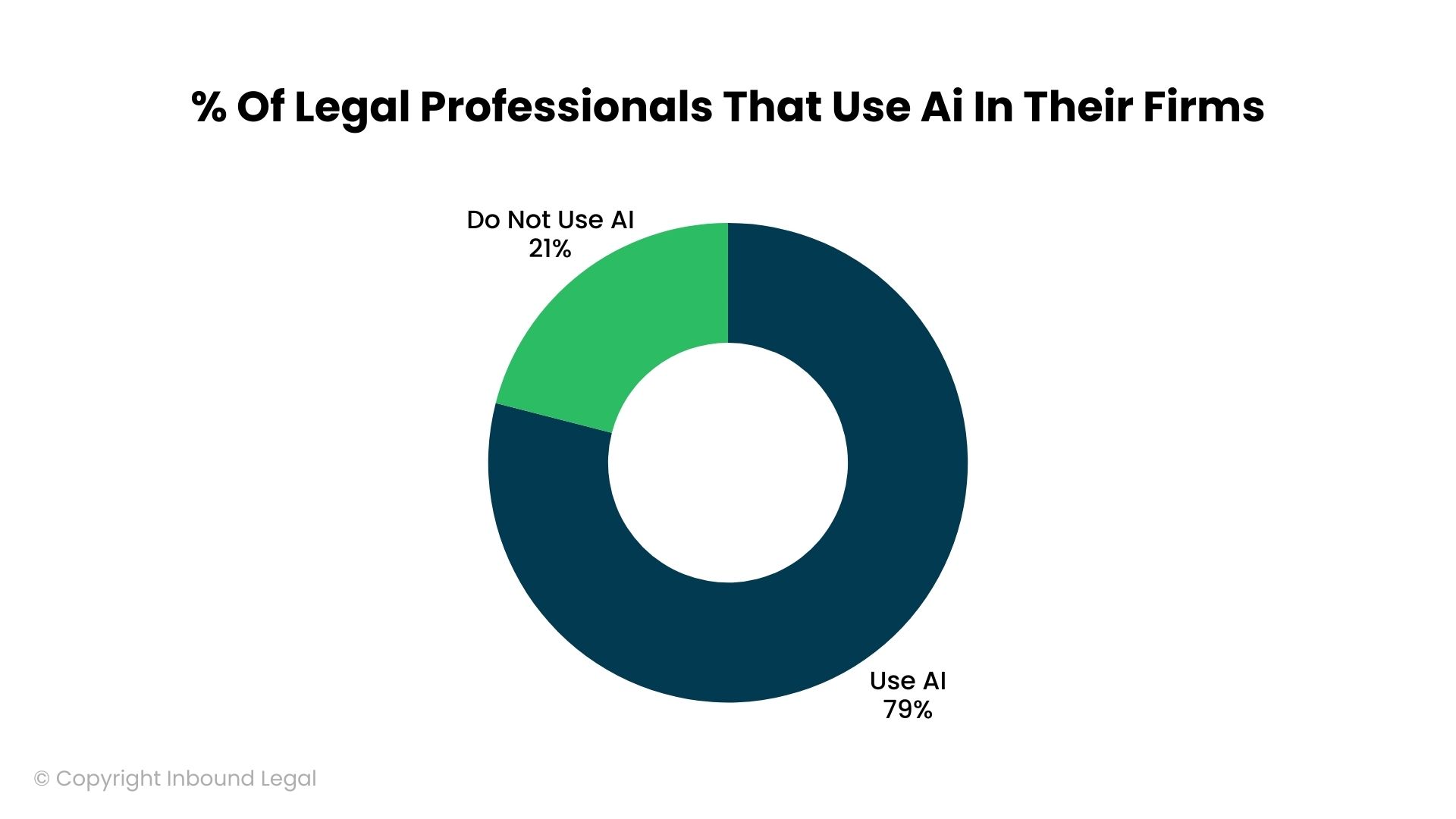
79% of legal professionals use AI in their firms.
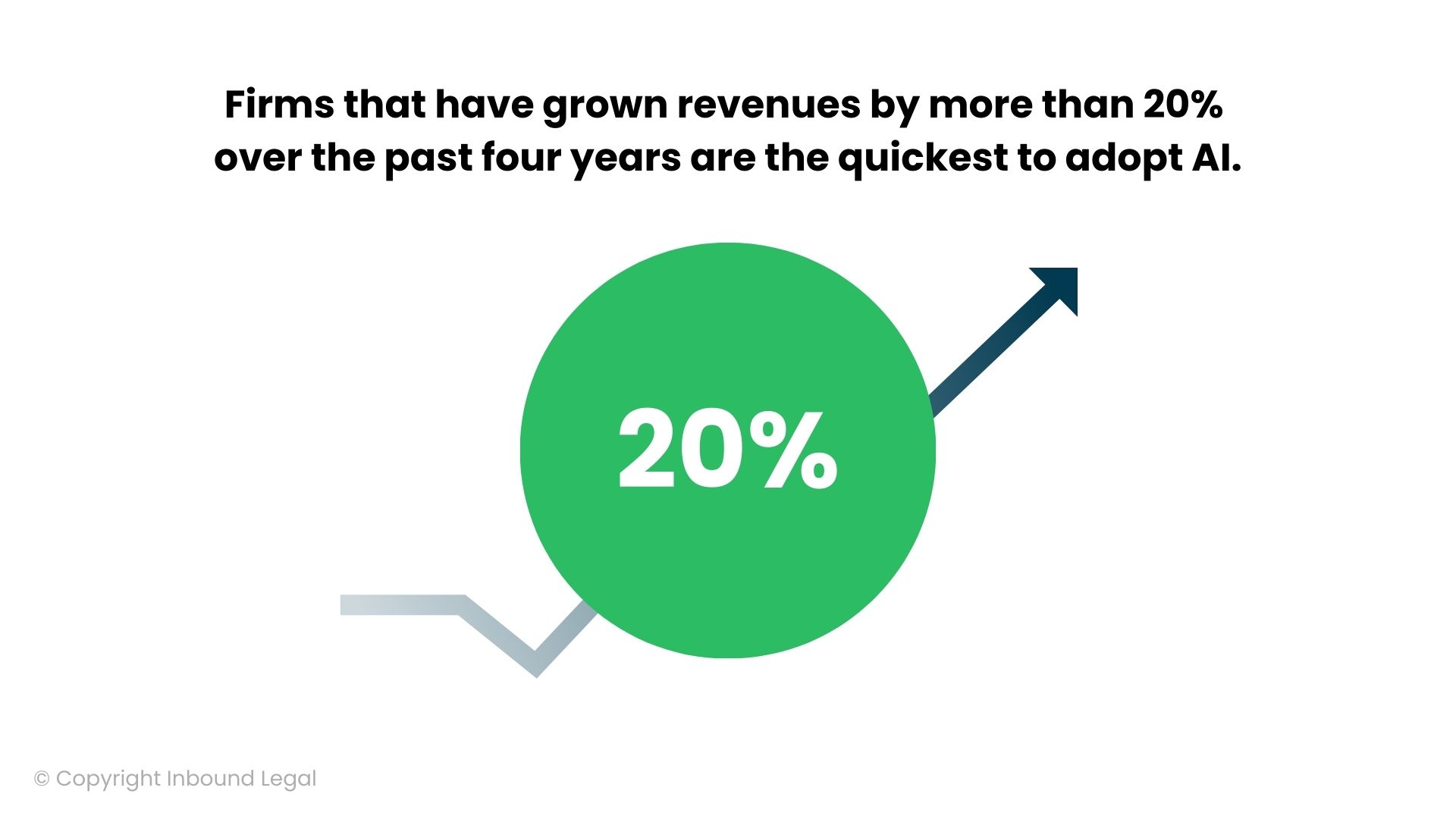
Firms that have grown revenues by more than 20% over the past four years are the quickest to adopt AI.
Firms with wide AI adoption are nearly 3x more likely to report revenue growth compared to firms that have not adopted AI.

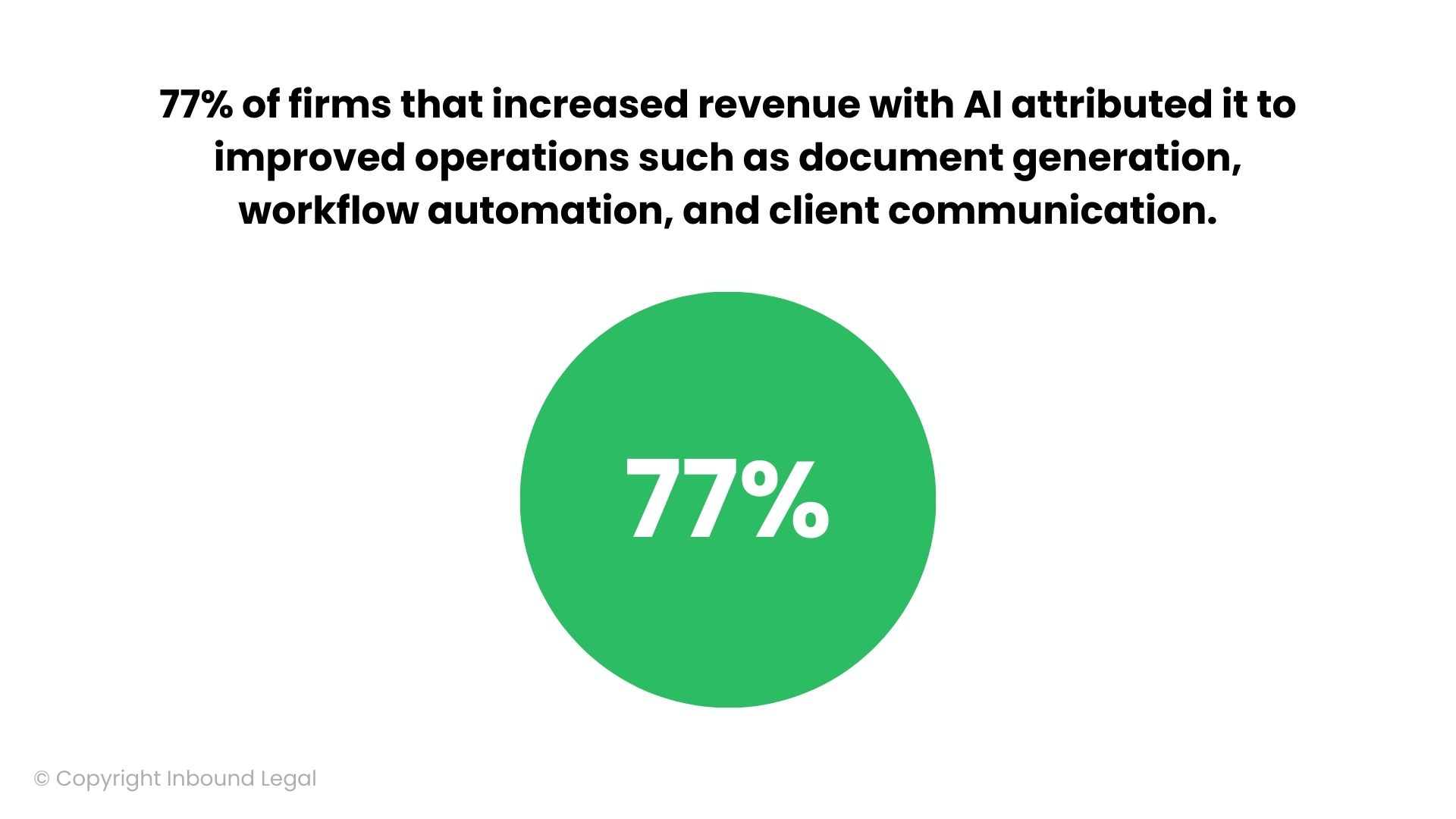
77% of firms that increased revenue with AI attributed it to improved operations such as document generation, workflow automation, and client communication.
Over half (55%) of law schools offer classes dedicated to AI.

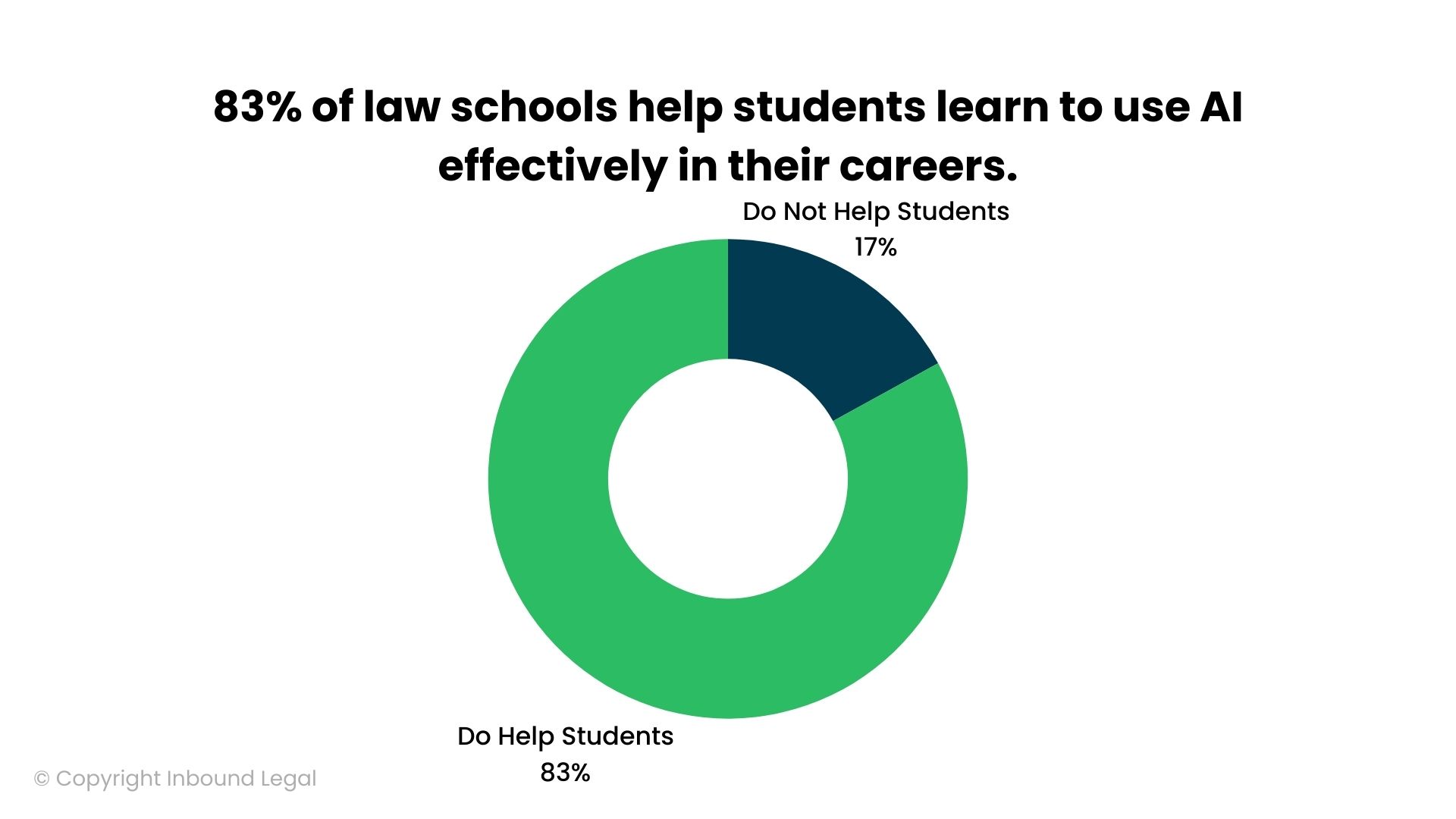
83% of law schools help students learn to use AI effectively in their careers.
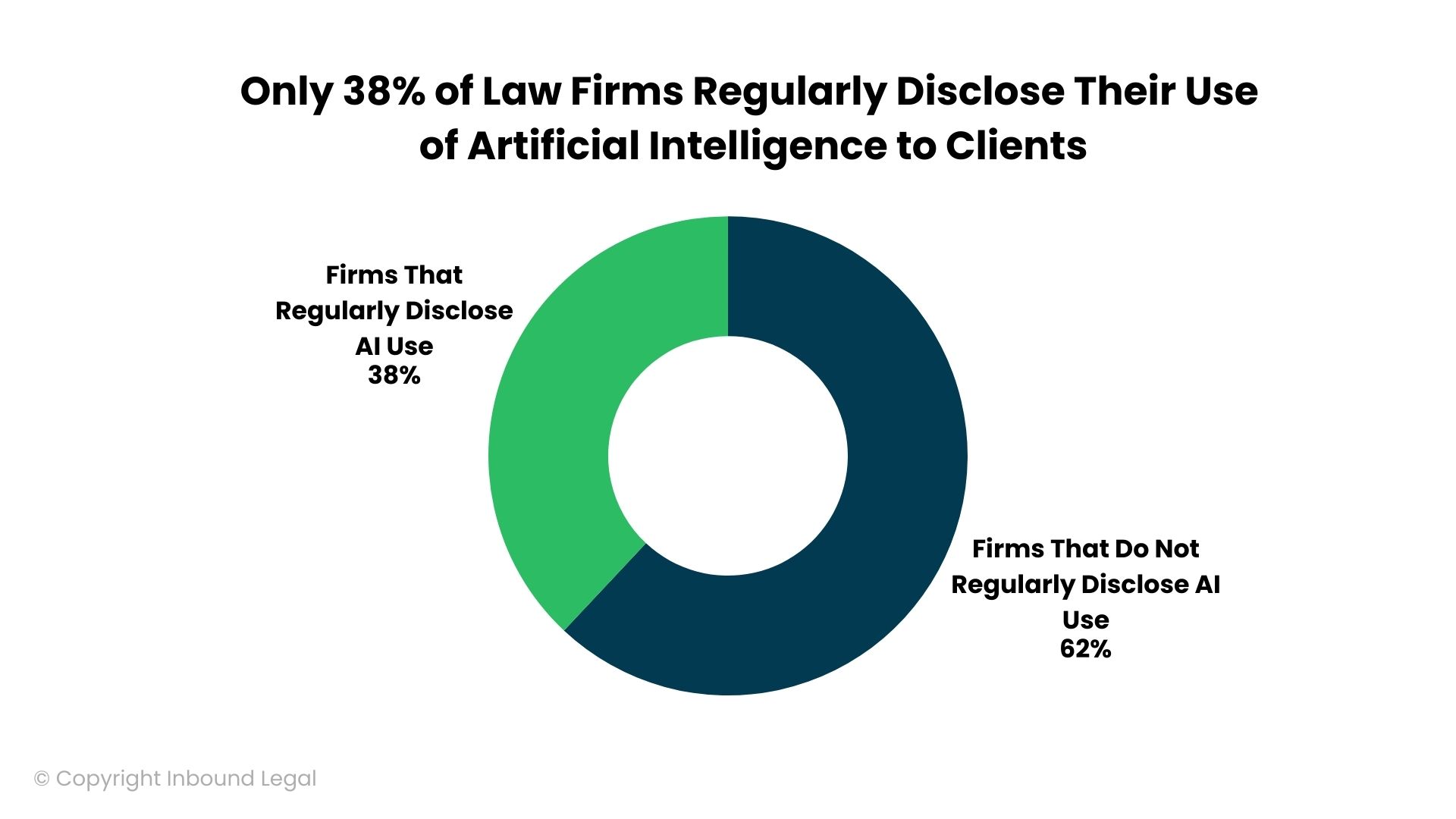
38% of law firms disclose the use of AI to clients somewhat regularly.
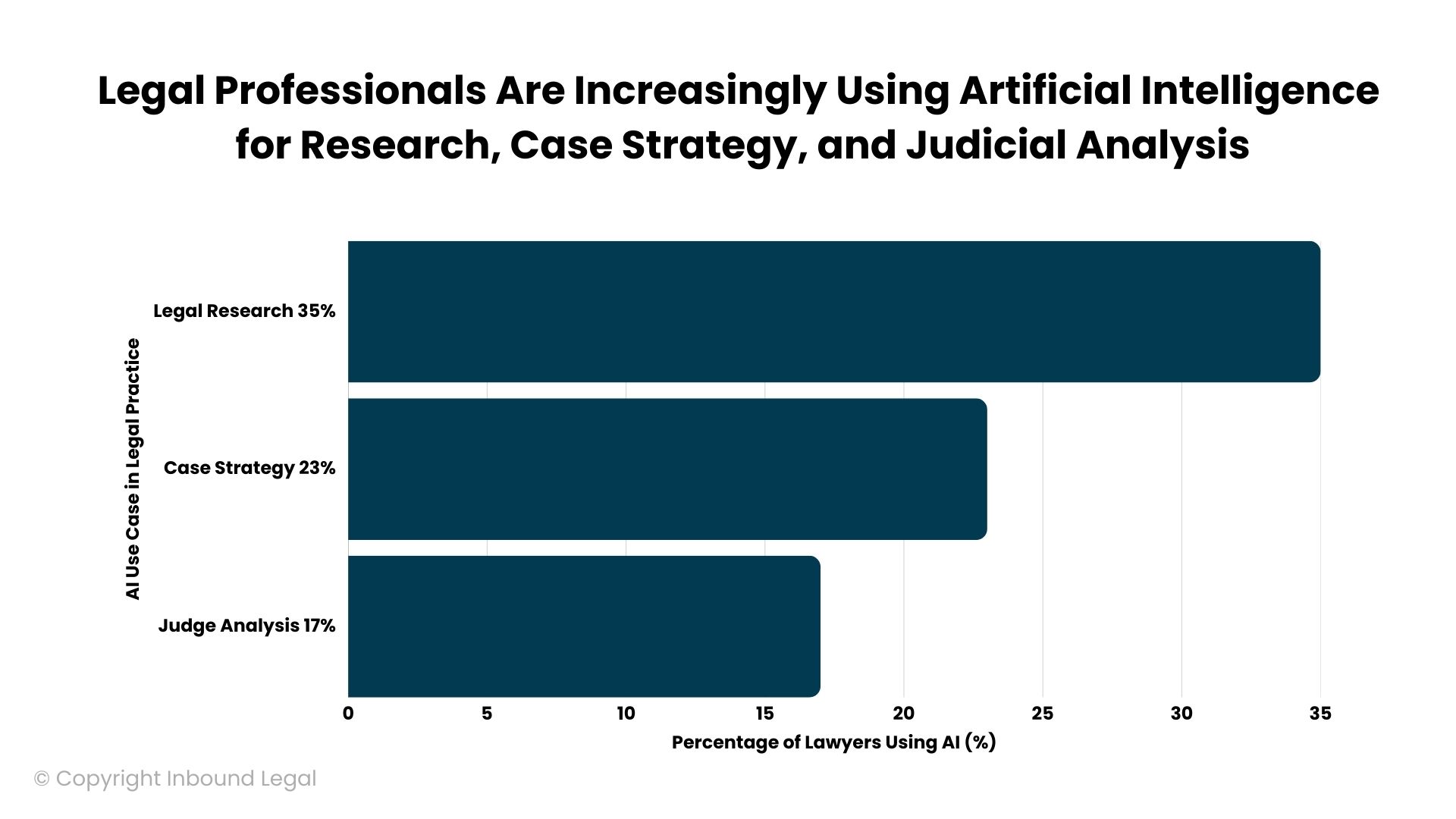
35% of lawyers use AI for legal research, 23% for case strategy, and 17% for judge analysis.
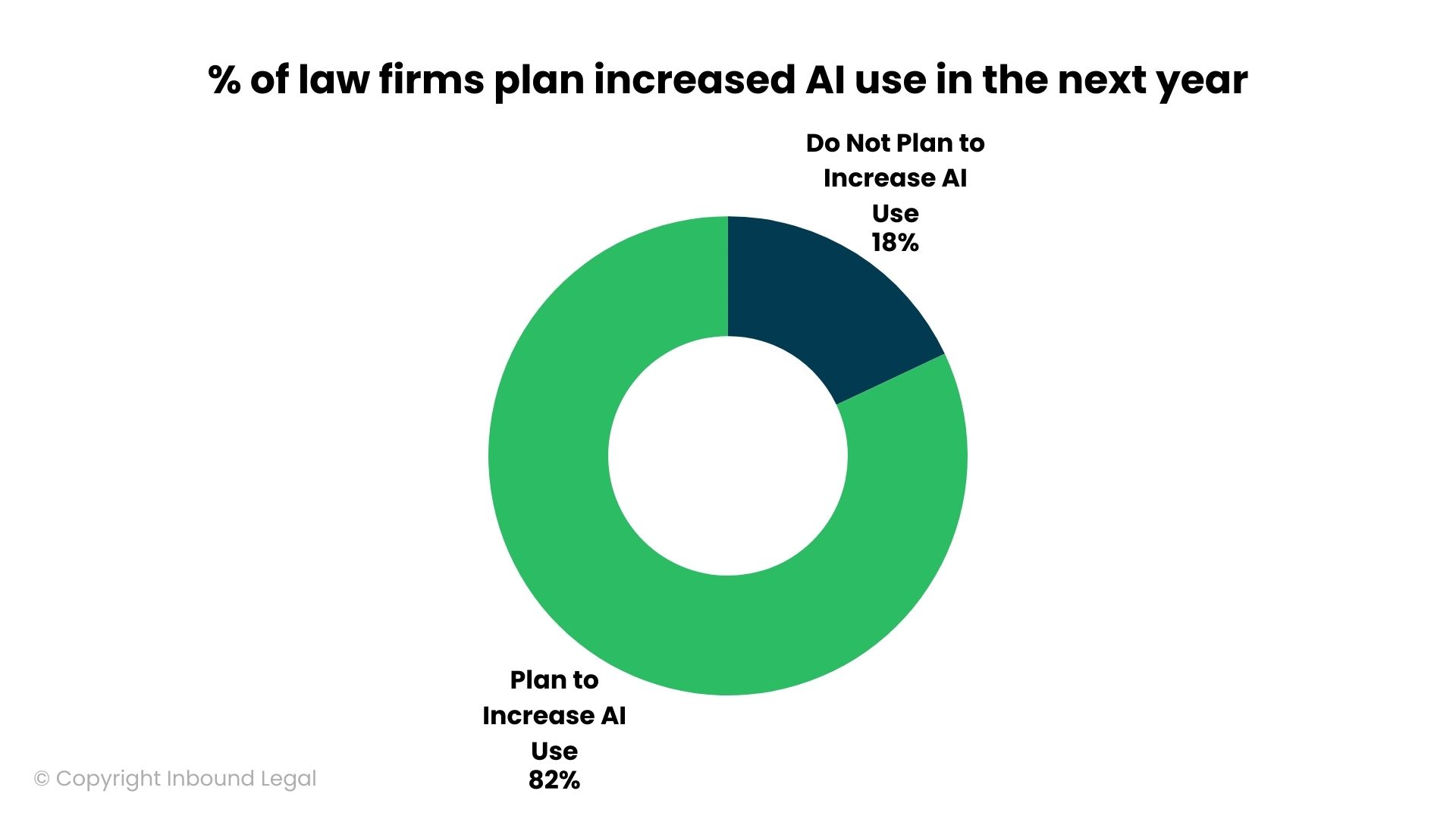
82% of law firms plan increased AI use in the next year.
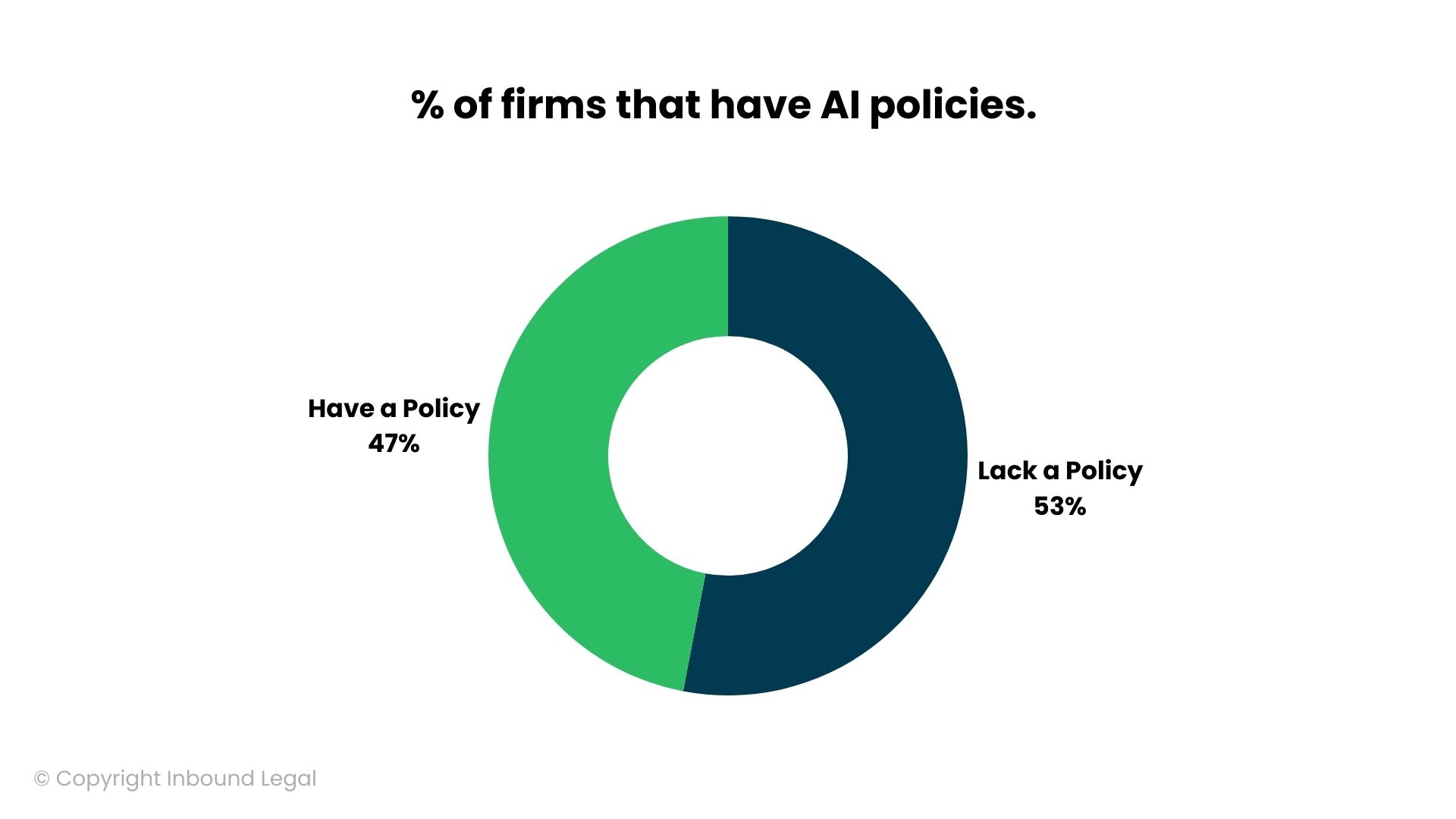
53% of firms lack AI policies.
Lawyer websites serve as primary discovery points for clients and act as the essential hub of the lead generation process.
Only 6% of lawyers don’t currently have a website.
30% of firms updated their websites in the last 6 months.
Only 30% of law firms offer downloadable lead magnets in exchange for contact information.
65% of law firms say their website brings the highest return on investment.
77% of law firms say their website is mobile-friendly (19% don’t know).
24% of law firms have marketing staff to manage their website, 21% use outside consultants, 13% use a lawyer in the firm, and 12% use an office manager or firm administrator.
Only 14% of law firm websites offer the ability to schedule a consultation.
The most included page on law firm websites is attorney profiles (virtually all lawyer websites include these).
53% of mobile users to law firm websites will leave if it takes more than 3 seconds to load.
53% of lawyers who maintain their own blogs gained clients directly or via referrals.
64% of law firms showcase reviews/testimonials on their website
12% of law firms have integrated live chat into their website to engage clients in real time.
Search engine optimization (SEO) remains a key marketing channel for law firms looking to generate organic leads. The numbers tell you where your firm should focus to stay ahead.
The #1 result in Google’s organic search results gets 27.6% of all clicks.
The #1 organic result is 10x more likely to receive a click compared to a page in the #10 spot.
Law Firms with a complete Google Business Profile are 70% more likely to attract visits from potential local clients.
72.9% of pages in Google’s Top 10 are more than 3 years old (evergreen content dominates).
The average law firm spends $120,000 annually on SEO. The highest spenders are personal injury and criminal defense firms ($165,000-$210,000).
SEO investments typically break even after 14 months, with organic traffic increasing by about 21% annually.
The average annual increase in organic traffic from investing in law firm SEO is 21%.
Law firm SEO yields a 3-year average ROI of 526% (with a break-even time of around 14 months).
Law firms that appear in local packs can get about 44% of user clicks.
Paid web advertising like Google Ads and Facebook Ads often generates leads more quickly than organic SEO marketing. However, this stops when the ads stop, whereas SEO leads can keep going even after the campaign stops (though ongoing content should be produced to maintain rankings)
5 of the top 10 most expensive Google Ads keyword phrases are for legal services, specifically those related to accidents and injuries.
Around 23% of law firms invest in web ads, and around 18% invest in local ads.
58% of all traffic in the legal space is generated by paid search.
U.S. law firms typically spend $3,000–$5,000 per month on PPC ads, with a budget of $4,000 minimum recommended for strong visibility.
The typical cost per click (CPC) for law firm PPC is $70 to $250, depending on your location and competition level.
The cost per lead (CPL) can range from $700 to $1,500.
The cost-per-client (CPC) acquisition is typically $2,500 to $3,000.
Average Google Ads conversion rate for lawyers ranges from 5-10.5%, depending on practice area, ad type, and location (the average rate across industries for Google Ads is 7.52%).
Just over 50% of law firms invest in social media marketing, though a higher percentage maintain a presence.
31% of lawyers personally retained a client through social media activity.
57% of law firms use Facebook daily.
81% of lawyers participate on social media for professional purposes, while 87% of lawyers have a presence on LinkedIn.
39% of law firms are outsourcing social media marketing.
Here are a few other interesting law firm marketing statistics to note:
For most law firms, it takes an average of 13.4 leads to produce a new client.
48% of legal clients found the last lawyer they hired by referral, 26% by internet search, 21% by law firm website, and 15% by online reviews.
About 80% of prospects move on to another firm if they don’t receive a response within 48 hours of their initial inquiry.
Law firms typically dedicate 2-10% of revenue to marketing.
Typically, 34% of attorneys handle marketing themselves, 31% have dedicated marketing staff, and 25% delegate it to consultants, office managers, etc.
Event sponsorship is the most popular traditional marketing channel, with 44% of law firms investing in sponsoring or attending events.
Video is a growing law firm marketing trend, with 30% of firms creating videos to help market their practices.
Law firms must understand what their clients expect of them, to help shape their marketing, messaging, and internal practice processes.
How law firms communicate with prospects/clients and manage the internal processes will largely determine whether leads turn into paying customers and whether existing clients return for further legal services.
48% of legal clients rank experience in similar cases as the leading aspect of a law firm to consider before hiring.
44% rank reputability as the leading factor.
33% rank positive client reviews as the leading factor.
70% of clients prefer or are neutral toward AI-using firms.
50%+ turn to AI first for legal issues.
78% want disclosure of AI use, but 35% of lawyers rarely disclose.
75% of clients visit two to five law firm websites before contacting a firm.
Over 70% of people with a legal need reach out via phone when initially contacting an attorney, and 50% expect a same-day response.
71% of clients prefer flat fees for entire cases.
20% of law firms were hit by cyberattacks in the past year, with 39% leading to data loss.
37% of legal clients are willing to pay a premium for law firms with strong cybersecurity measures.
Only 34% of firms have incident response plans.
80% of firms use spam filters (the most common security measure taken by law firms).
59% of firms bill flat fees exclusively or in addition to offering an hourly rate — a growing trend.
On average, lawyers bill just 2.6 hours (33%) of an 8-hour day.
Flat fee matters close 2.6x faster, driving adoption among growing practices
82% of law firms now offer clients the ability to pay online for legal services.
The average law firm carries about 93 days’ worth of work that is either unbilled or unpaid.
The average billable rate for lawyers is approximately $349 per hour.
The average law firm is collecting on nearly twice as many billable hours as it did 10 years ago.
Bankruptcy, IP, and patent law commands the highest average hourly billing rates.
There are more than 1.37 million practicing lawyers in the United States
New York, Washington DC, and California are the most populous states/districts for lawyers.
The highest average lawyer wages in the country are found in California (San Jose, San Francisco, and Los Angeles), the New York City metro area, and Washington, D.C.
Even with the advent of AI, employment rates for law graduates in 2025 are at an all-time high of 93%,
Over the last decade, the legal profession has shifted from a male majority to a female majority, with most law school students, federal government lawyers, and law firm associates now female.
Lawyers are among the highest-paid people in the United States, with the average lawyer wage up 19.2% between 2021 and 2023.
The mean annual wage for lawyers is $182,760.
The data for these lawyer statistics were compiled from several main sources, including the following:
- Clio Legal Trends Report 2024/2025
- ABA Legal Technology Resource Center’s Legal Technology Survey Report 2023
- American Bar Association’s Profile of the Legal Profession Report 2025
- US Bureau of Labor Statistics
Inbound Law Marketing helps law firms take a data-centered approach to marketing, using law firm statistics and trends to shape marketing policies.
We believe in results, and marketing results come from an informed marketing strategy.
Find out more about how we can help.

Written By: Calin Yablonski
Calin Yablonski is a veteran digital marketing strategist and the founder of Inbound Legal.
With over 15 years of experience specializing in high-performance SEO and lead generation, Calin has helped hundreds of professional service firms scale their online presence.
Previously the founder of Inbound Interactive and a recognized "Notable Young Entrepreneur," his expertise in legal marketing has been featured on legal platforms like Clio, Law Pay, Caret Legal, Practice Panther, The National Law Review, Bill 4 Time, Smith.ai, and more.