Whether you call it Google Ads for lawyers or PPC for law firms, Google advertising should be a key part of your firm’s marketing mix.
You can generate a ton of quality leads if your ads show up at the top of the page when potential clients are actively looking for legal help.
The problem is that legal keyword terms are highly competitive and range from the low tens of dollars to well over $200 per click, depending on practice area and location.
Money can go quickly down the drain if you don’t get Google Ads campaigns right.
That’s where we come in. Based on years of real-world experience in managing law firms’ Google Ad campaigns, we show you what works and how paid traffic can handsomely supplement the leads you derive from organic SEO.
1. Prioritize transactional, long-tail keywords
The most competitive, expensive keywords are generic terms like “lawyer” and “attorney”. Avoid these, as they can be eye-wateringly costly to rank for.
Instead, target specific terms with a lower search volume but higher transactional intent.
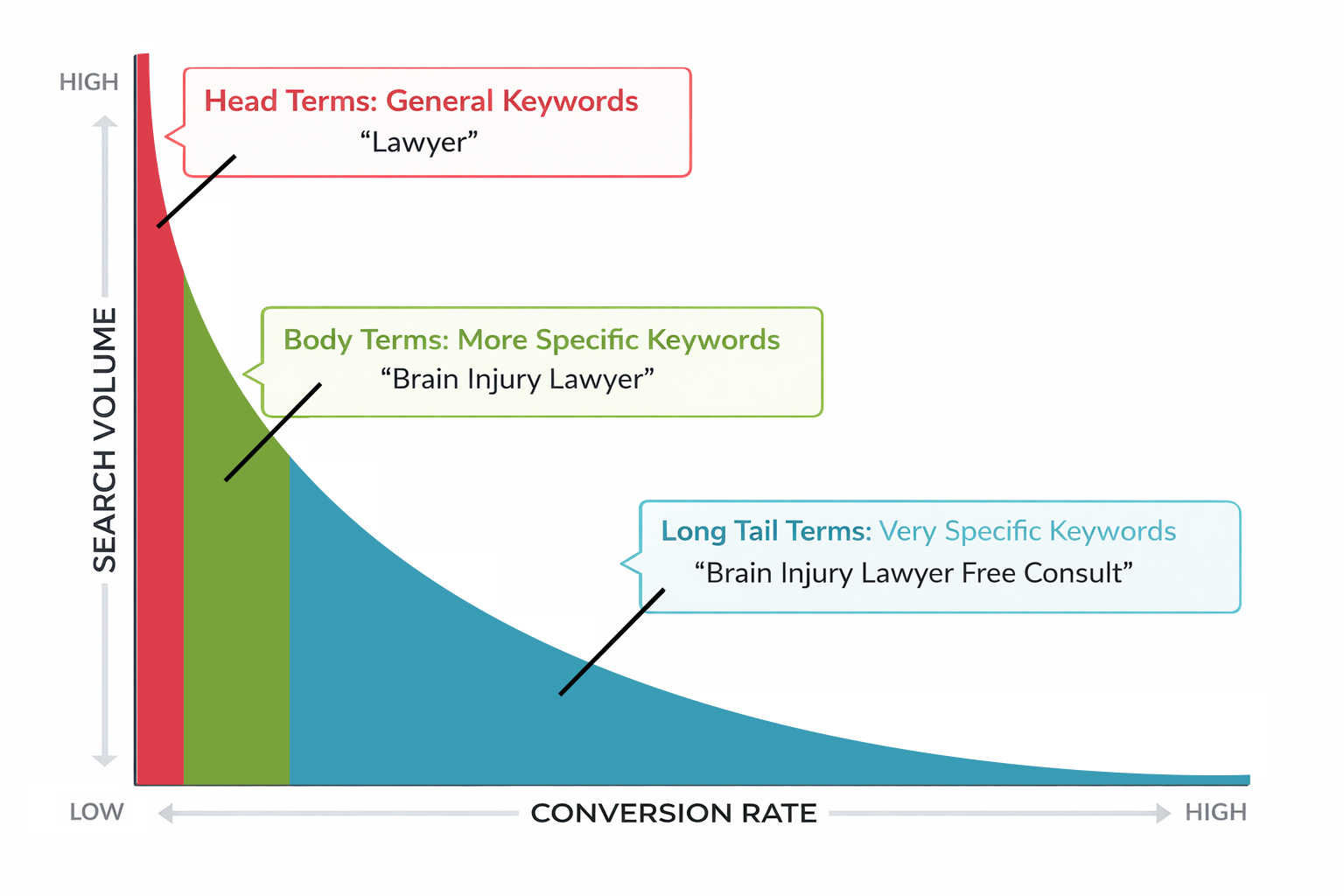
The best campaigns target high-intent, specific phrases like:
- DUI attorney free consultation Miami
- wrongful termination lawyer near me
- car accident attorney in the Bronx free consult
Here are some specific long-tail examples used in client ads.
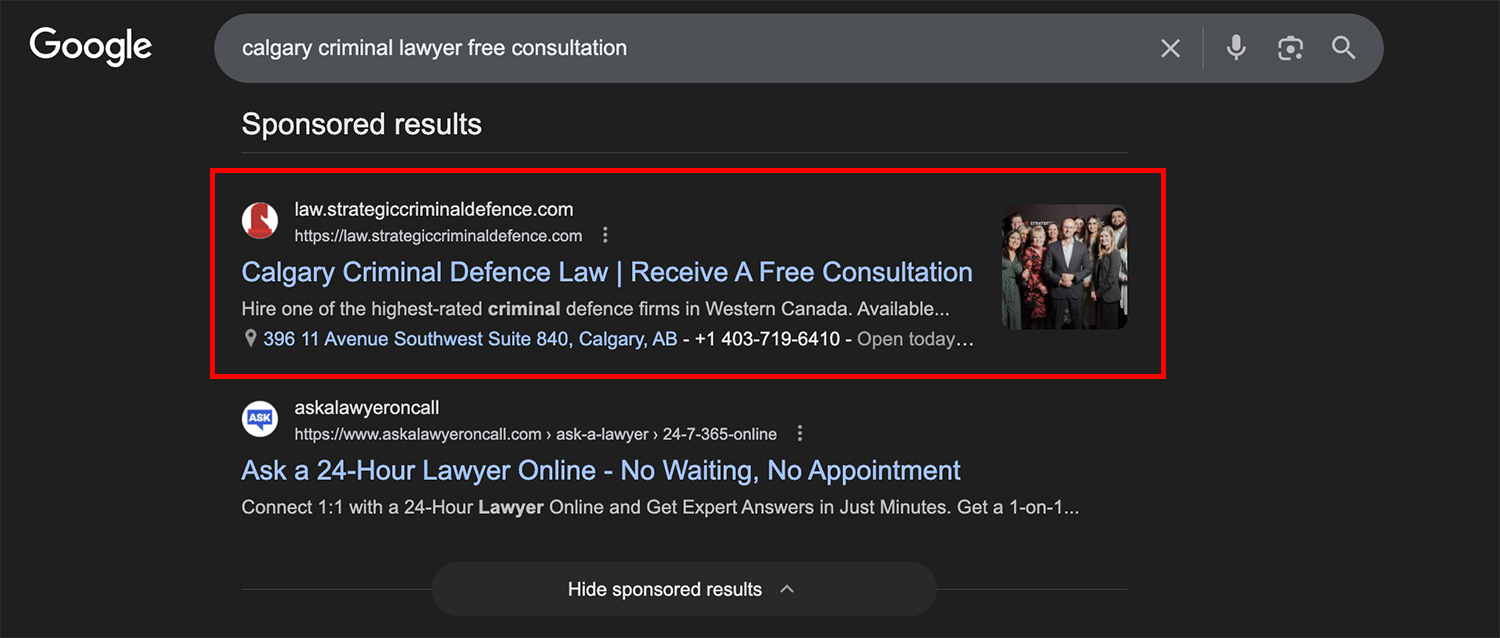
Using terms like these not only costs less than shorter, generic terms, but they also convert better.
2. Master negative keywords (a real budget saver)
You’ve seen examples of the keyword types to target in a law firm’s Google Ad strategy but you also need to specify terms you DON’T want your ad to show up for.
Usually, law firms seeking high-quality leads should exclude an array of terms like
- free
- pro bono
- cheap
- school
- careers
- jobs
- courses, etc.
Firms should also add some of the locations (provinces, states, cities) and practice areas they don’t serve to this list.
This is an example where we specify negative keyword lists:
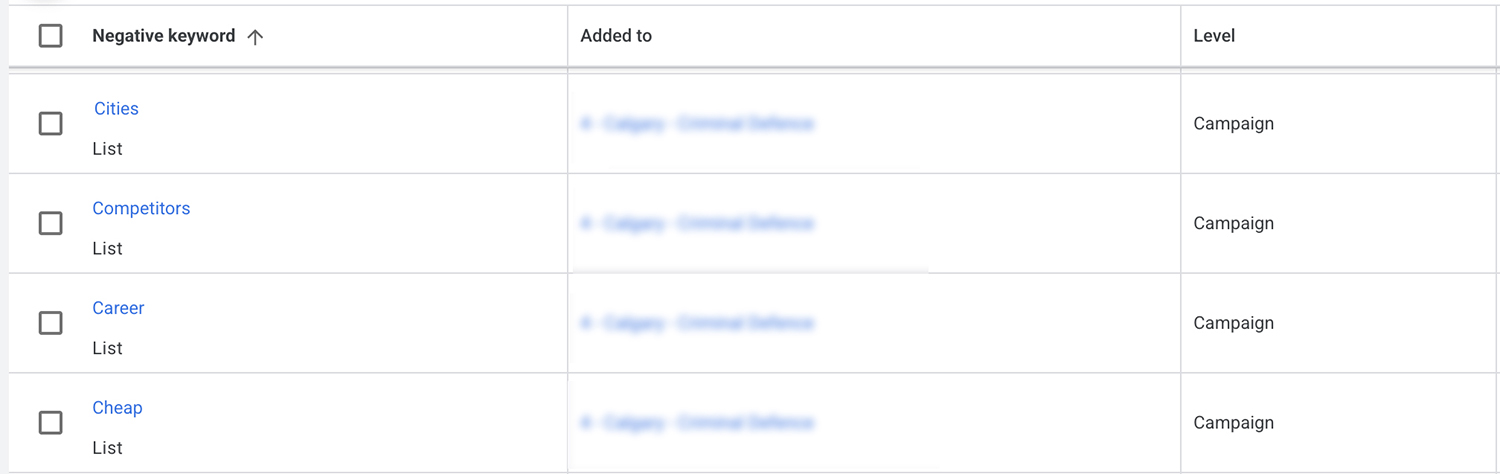
This strategy is a great budget saver, preventing many parties not actively seeking legal help from clicking your ad and costing you.
PRO TIP FOR LAWYERS: Click the Keywords column and select Search Terms or navigate directly to the Search Terms report. This will reveal the actual user queries that triggered your ads, allowing you to spot irrelevant terms for exclusion as negative keywords.
3. Utilize exact match and phrase match in campaigns
You only want your Google ads to be triggered for highly relevant searches that can lead to clicks from potential paying customers.
To do this, use exact match and phrase match in campaigns. A broad match strategy for keywords is lazy practice and can rapidly drain your budget, given the high keyword costs in the legal space.
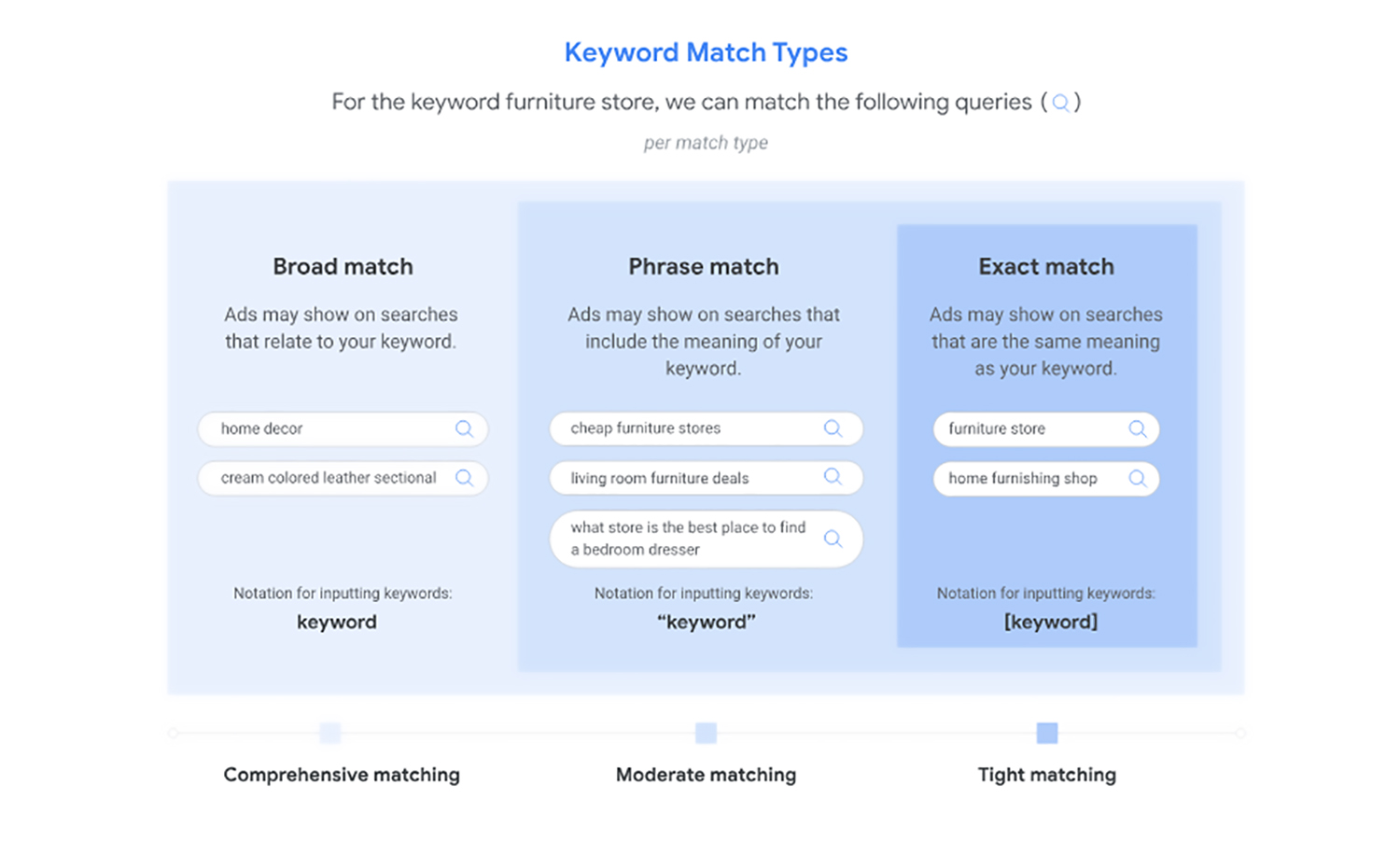
So, it’s best to aim for the following:
- Exact match: High precision and relevance = high conversion rate (but lower traffic). Ads show on searches that match the exact term or are close variations.
- Example keyword: car accident lawyer Chicago
- Example search: car accident lawyer Chicago
- Phrase match: Moderate precision and relevance = moderate traffic and conversion rate. A keyword triggers your ad when someone searches for terms like your keyword phrase, including close variations.
- Example keyword: car accident lawyer Chicago
- Example search: Chicago car accident attorney
4. Carefully shape your geo-targeting strategy
Targeting highly specific locations is an essential Google Ads strategy for lawyers.
It’s not enough to target criminal lawyer in Ontario. Target the specific cities, counties, or service radius in which your firm operates and accepts cases: Criminal defence lawyer in Brampton or Criminal lawyer in Markham, etc.
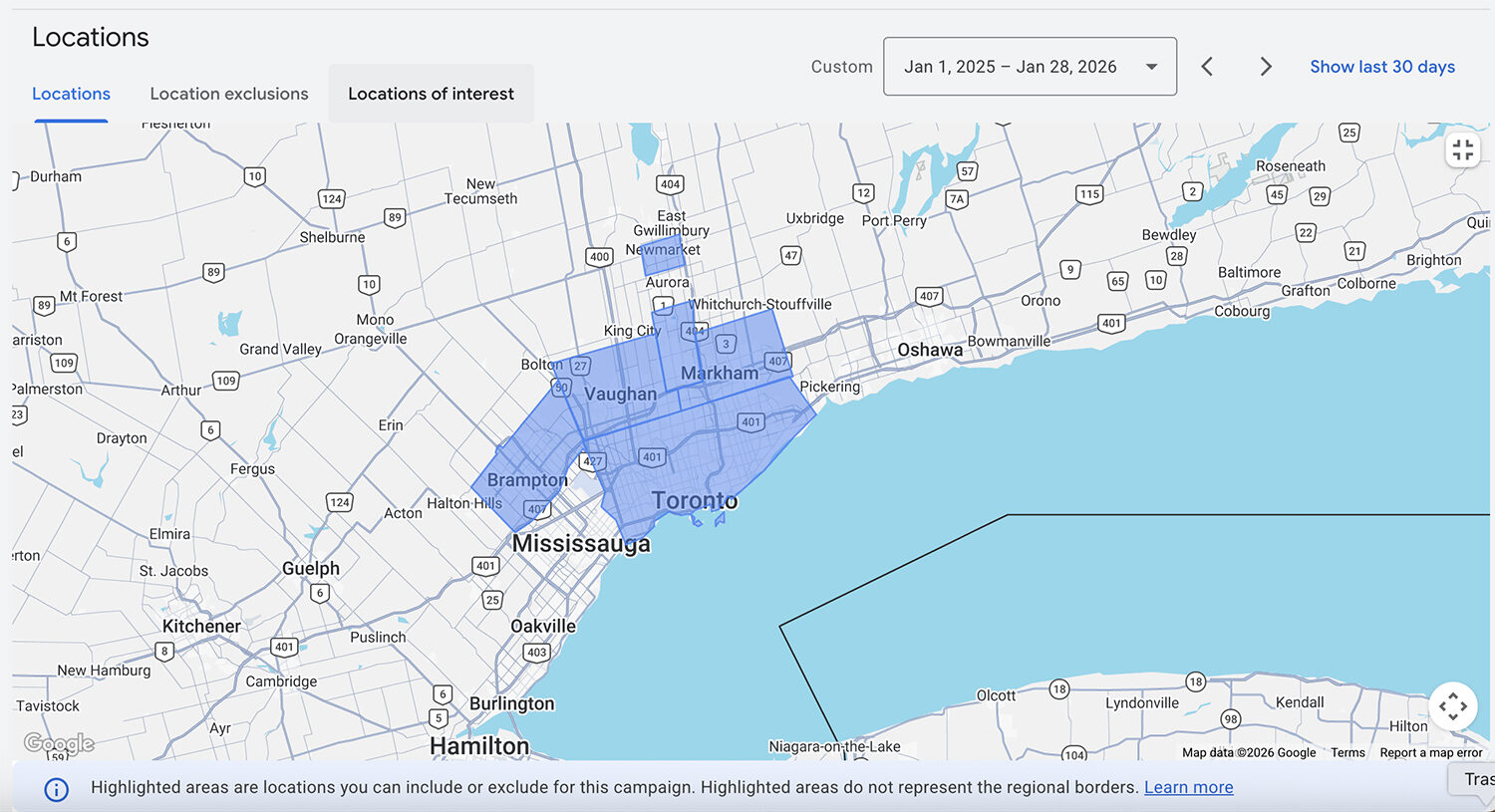
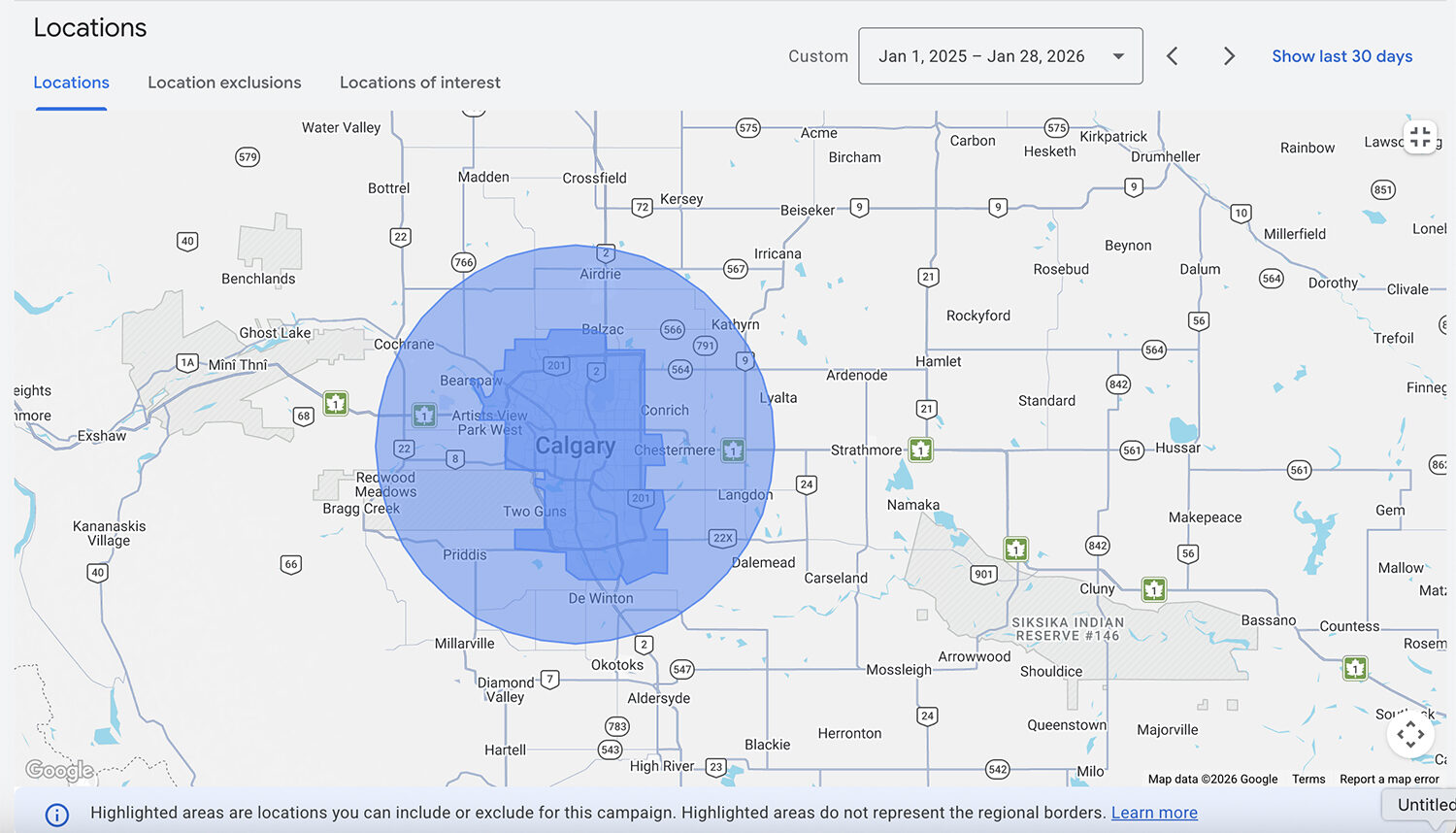
You might target clients within a 20-mile radius of your offices to reach local clients likely to convert.
Here’s how Strategic Criminal Defence does it for it’s Calgary location.
5. Adjust bids by time and device
Your keyword bidding strategy is central to controlling your Google Ads budget.
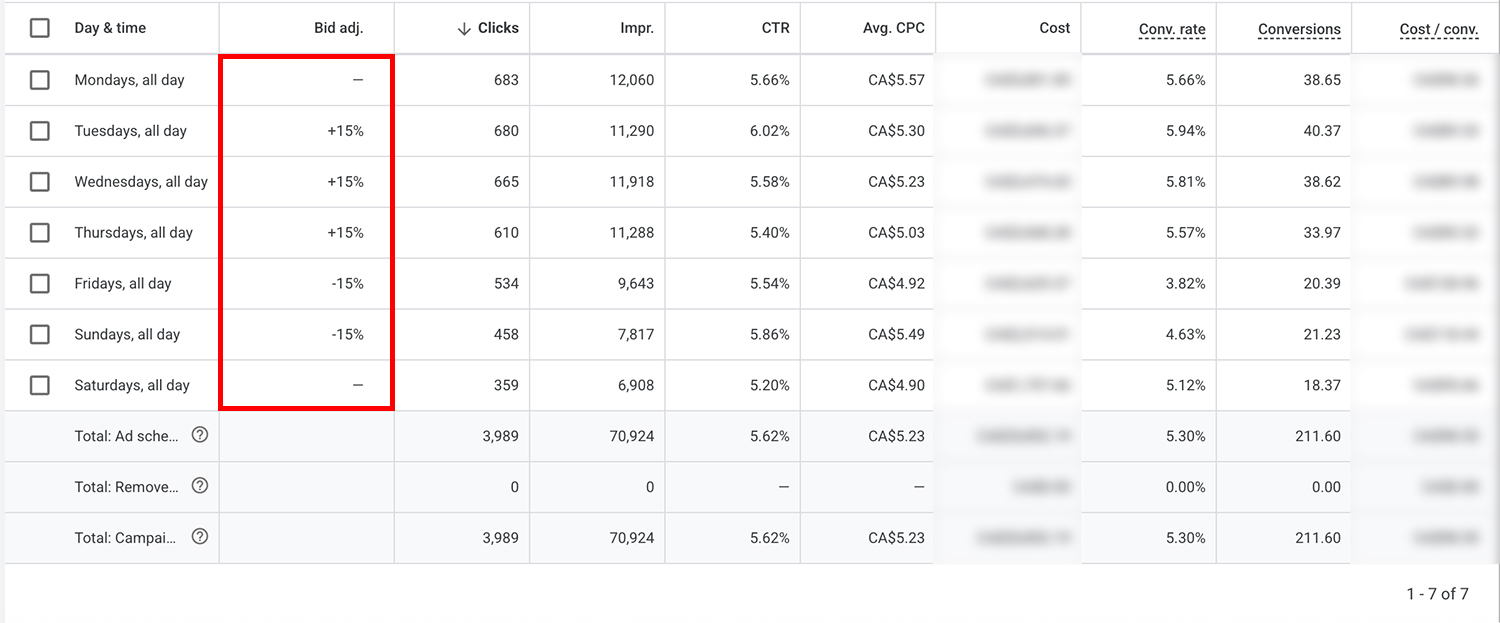
Analyze when leads typically call your firm, e.g., during 10-4pm.
Adjust bids to spend more aggressively during peak conversion windows or on specific days with a low Cost-Per-Conversion:
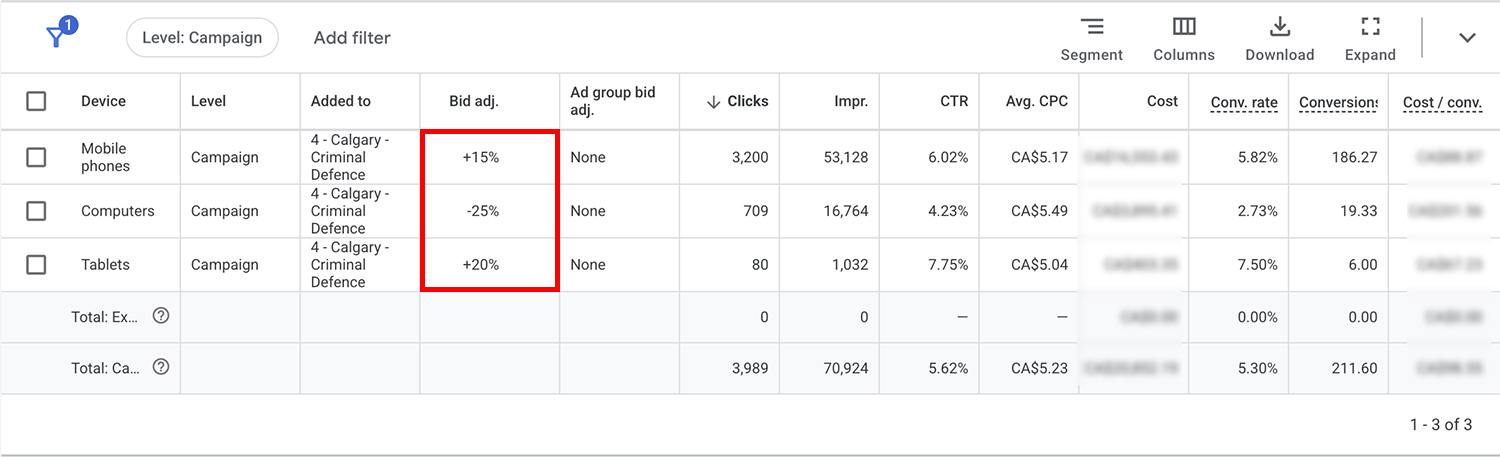
It is said that 70% of mobile searches lead to customer actions within one hour of taking place.
The majority of Google Ads-related calls will come from mobile users.
For law firms, most high-intent prospects looking to hire a lawyer will contact you by mobile, so it makes sense to adjust bids to spend more for mobile users.
6. Bid strategically
Keyword bidding is one of the main pitfalls with Google Ads for lawyers. The know-how of seasoned Google Ads campaigners really kicks in here.
Diverse bidding options exist, targeting various metrics:
- Conversions: This category is for advertisers who want a specific result like a lead form submission, a sign-up, or a download. Google uses its AI to find users most likely to “convert” based on their browsing history and intent.
- Conversion Value: Not all conversions are created equal. For example, a car crash file is more valuable than a dog bite case. This strategy requires you to send “value” data back to Google.
- Maximize Clicks: This is the “volume” play. It is best used for brand awareness, top-of-funnel content (like blog posts), or when you have a very limited budget and just want to see how much traffic you can squeeze out of it.
- Impressions: This is about “real estate” and being seen. It is rarely used for direct sales but is highly effective for brand dominance or “protecting” your brand name from competitors.
You’ll likely need professional help to select the strategy that best aligns with the campaign’s objectives.
7. Use single-keyword ad groups for your highest-performing keywords
Ad groups are sets of ads and keywords within a Google Ads campaign that share similar themes, targets, and bids, helping to organize the ad strategy. In these groups, users see the same ads for the same search terms.
For your highest-performing keywords, create ad groups with one keyword.
This will focus the budget on the most prized assets in the campaign, i.e.:
- Keywords with a high Quality Score (QS).
- Keywords with high search numbers.
- Keywords with high conversion rates.
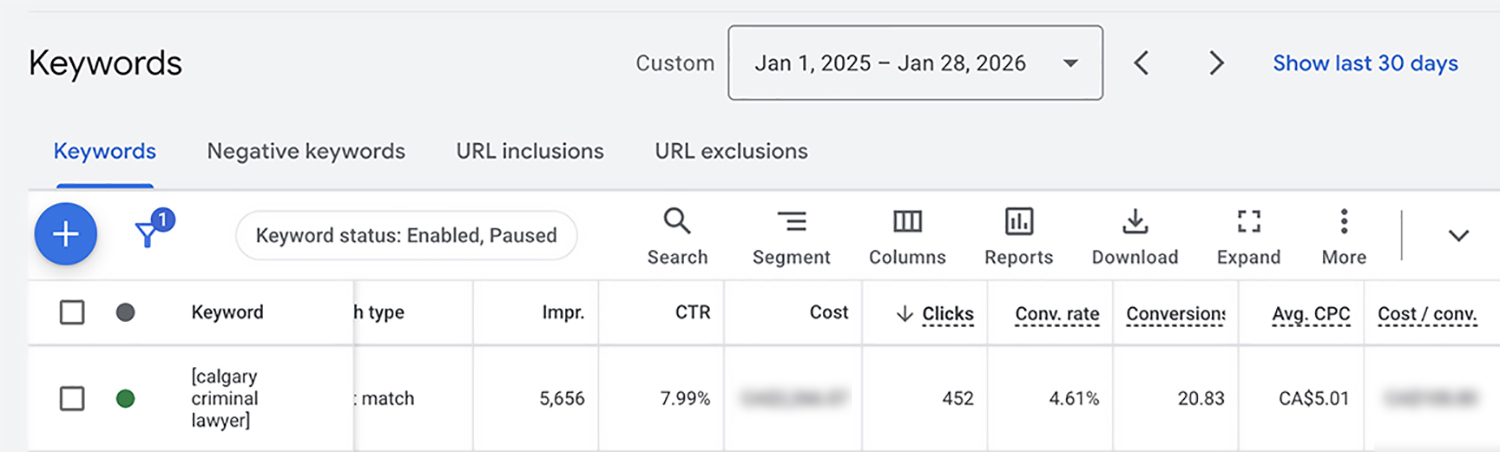
Keeping your highest-performing keywords isolated like this restricts wasted ad spend on lower-performing keywords and provides more control over the following key elements of Google Ads campaigns:
- Ad copy triggered by a keyword.
- Keyword bidding.
- A keyword’s Quality Score.
8. Focus on client pain points, not just services
One of the biggest mistakes we see with Google Ads for lawyers is that they read just like a list of services or practice areas.
The headlines of ads should speak to a need or pain point of the target audience. So, for instance, a personal injury lawyer might ask, “Injured in a car crash?” or a DUI lawyer could ask, “Just arrested for DUI?”
Here are a couple more examples from clients that illustrate well how to approach this:

9. Carefully incorporate dynamic keyword insertion in ad copy
Dynamic Keyword Insertion (DKI) automatically inserts the user’s search term into your ad, increasing relevance and Quality Score.
However, as powerful as this Google Ad strategy can be, ensure that you have tight control over the ad group control, so that irrelevant terms aren’t inserted.
Remember, DKI only works if you have multiple keywords in an ad group and one generic ad can serve all these keywords. In the above example, car accident lawyer, motorbike accident lawyer, and truck accident lawyer would all need to be in the same ad group.
Speak with your Google Ads professional before attempting this strategy.
| PERSON SEARCHES FOR: | YOUR AD COULD LOOK LIKE: |
|---|---|
| Car accident lawyer | Car accident lawyer Injured in a Car Crash? Call Now. www.personalinjurylawyer.com Maximum compensation with no upfront fees. Book a free consultation. |
10. Build trust and urgency into CTAs
Two of the main elements to focus on in your ad copy are trust and urgency. So, you want prospects to feel that there is no risk in contacting you immediately.
In particular, the call to action in your ad should compel the reader to get in touch.
Here are some ads with strong calls to action:
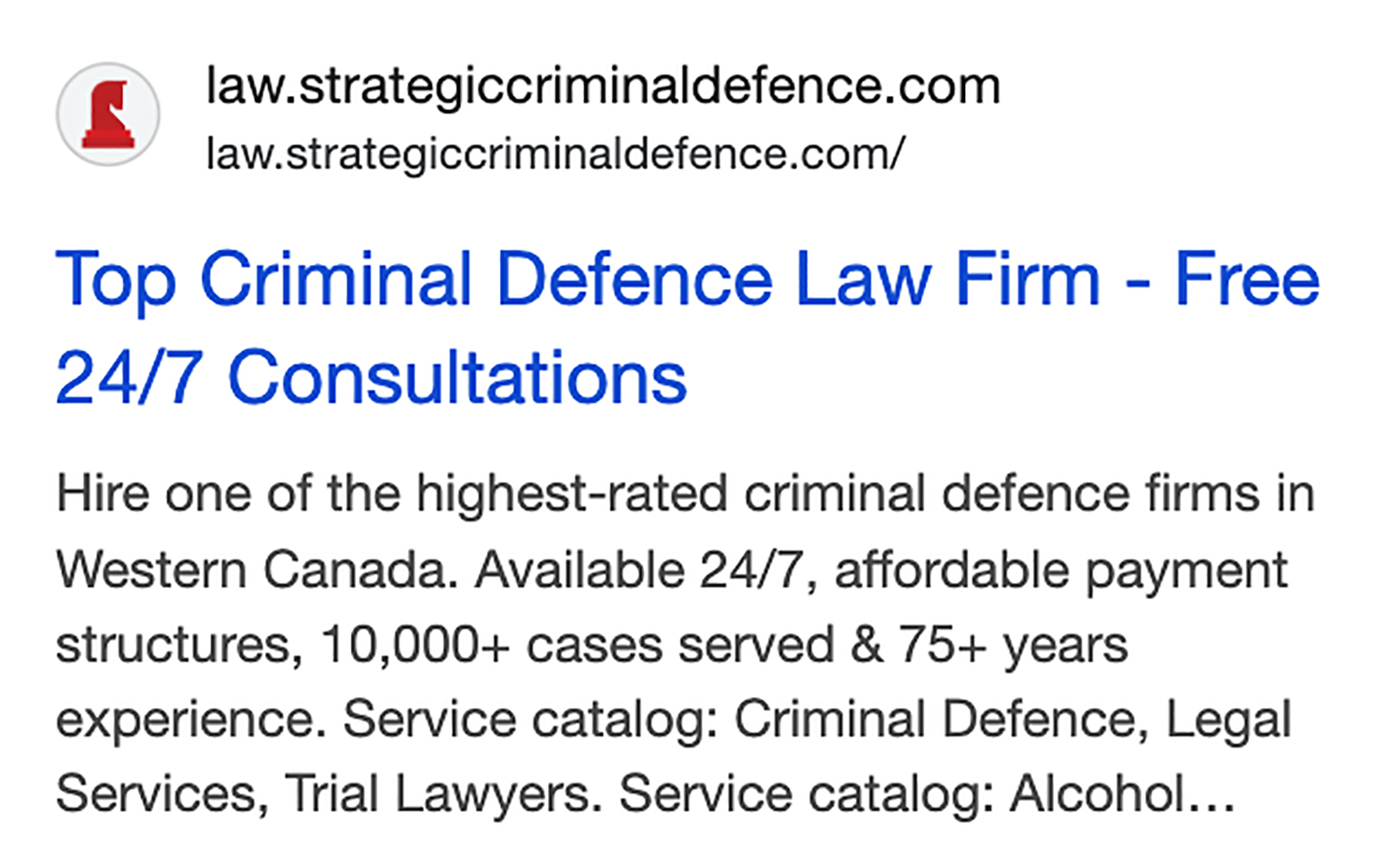
These calls to action are proven to work well, with generally high conversion rates in Google Ads for lawyers.
11. Use Ad Assets extensively
Ad assets (previously called extensions) enhance your ads, boost visibility for potential customers, and provide essentially free ad real estate to increase the click-through rate (CTR).
The most important assets to focus on are:
Call assets: These are essential for one-tap calling from mobile.
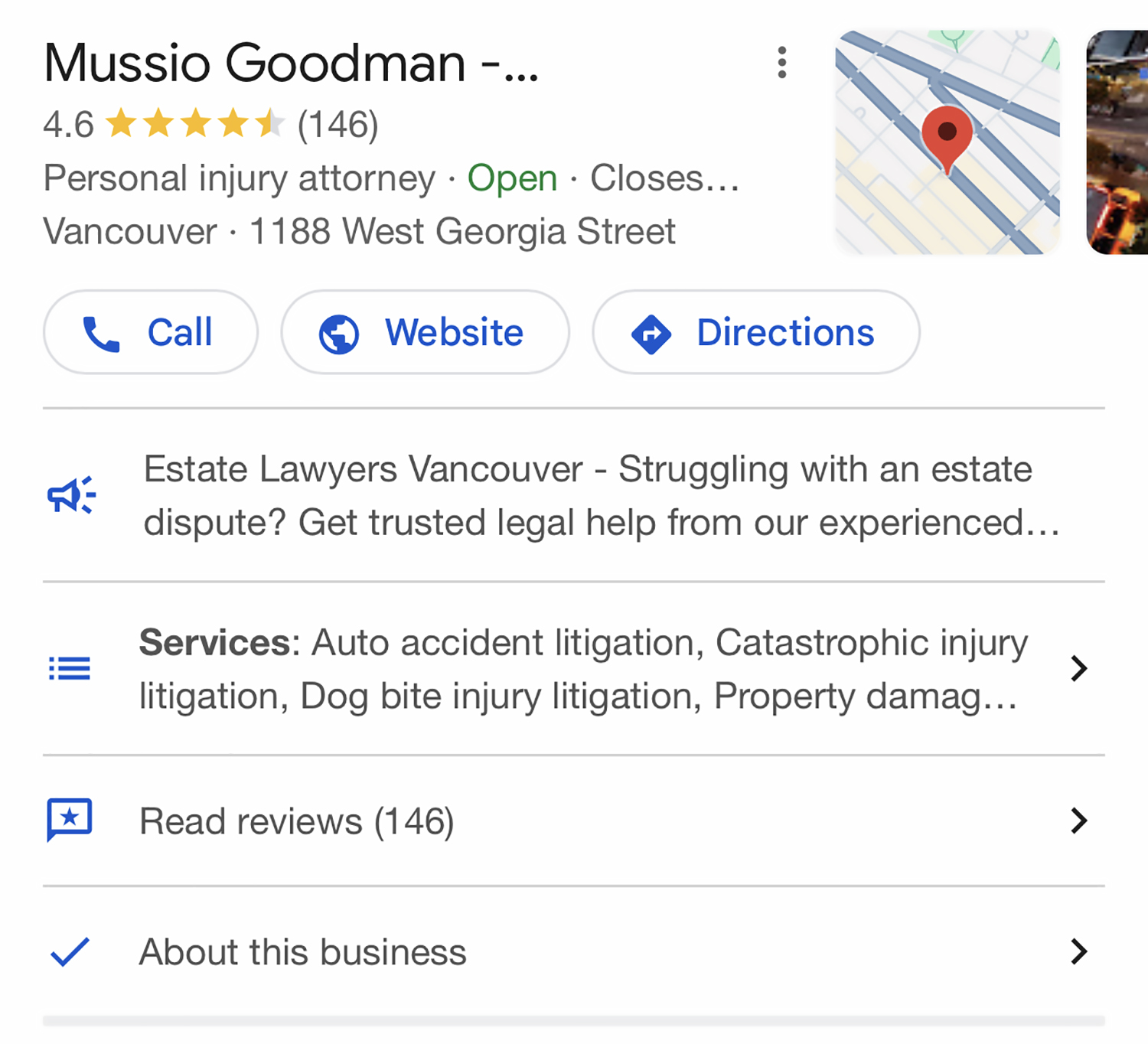
Sitelink assets: These link to high-value pages, such as case results, testimonials, etc.
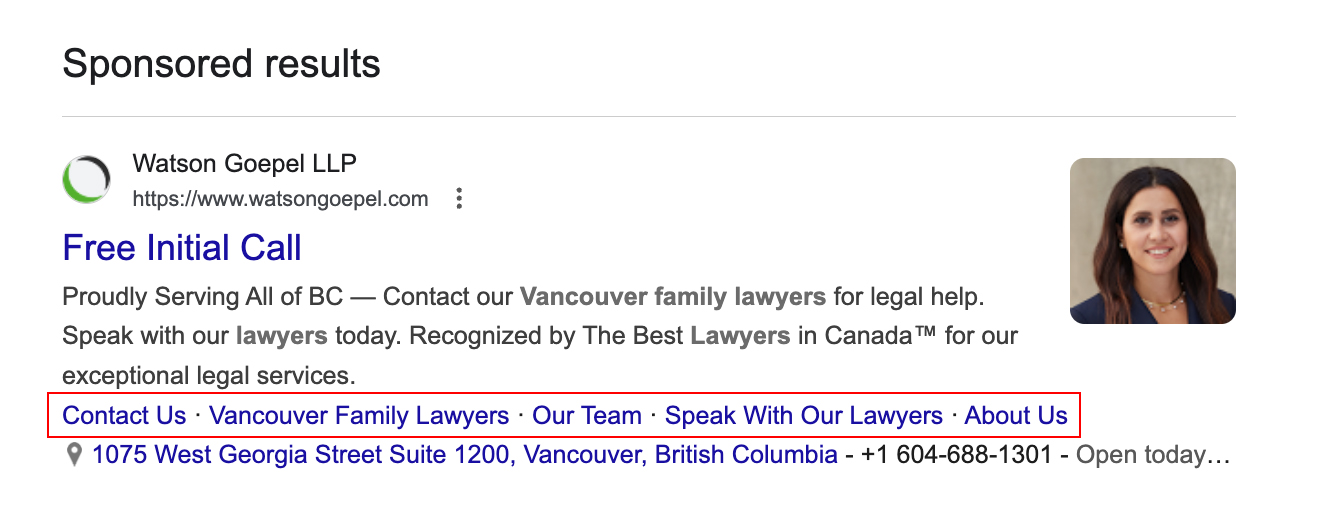
Location assets: These sync with your Google Business Profile for map visibility.
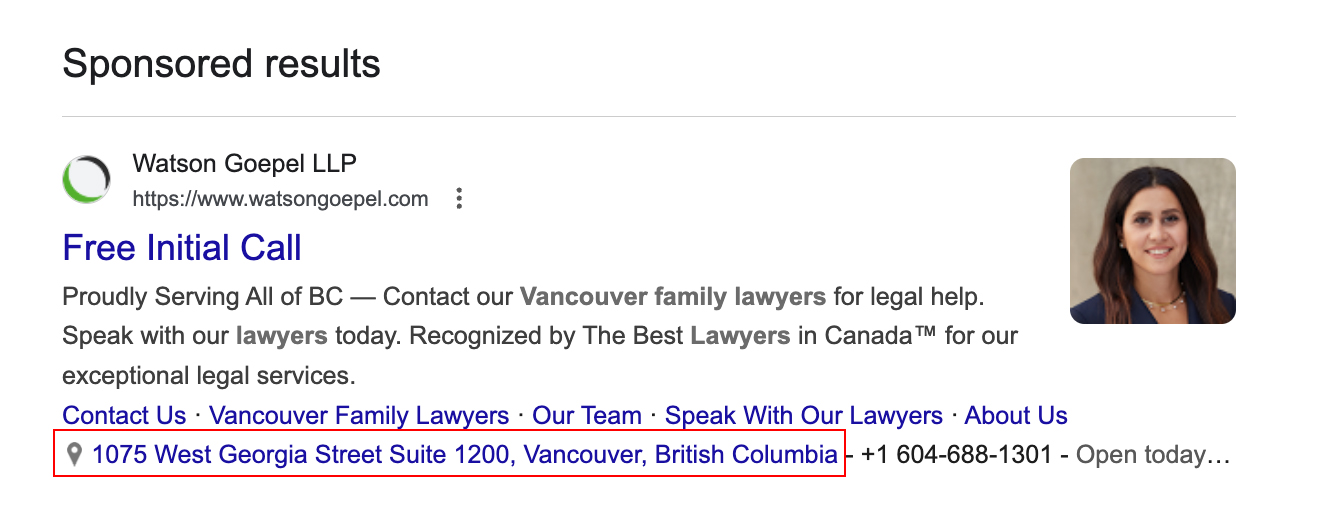
Callout assets: These highlight key differentiators or unique selling points, such as “No Win, No Fee” or “Millions Recovered”.
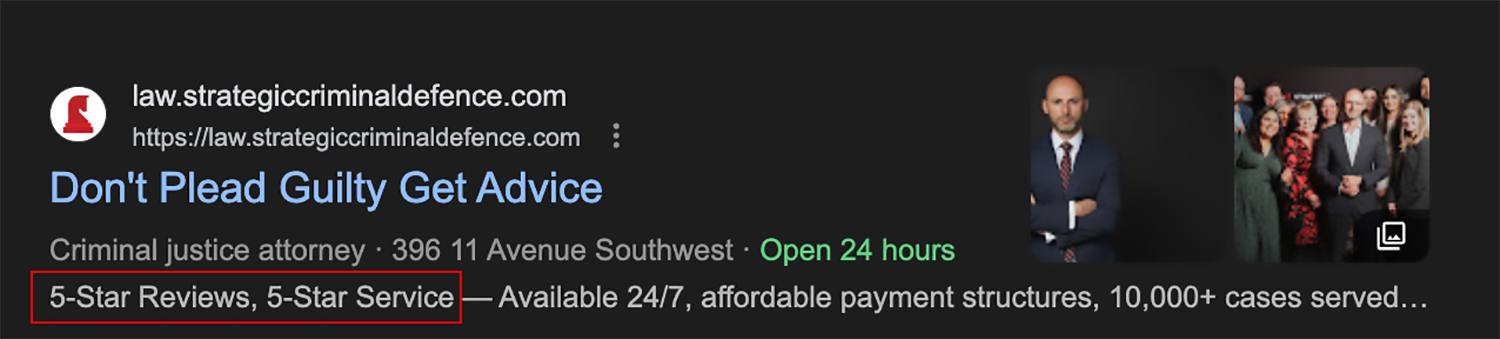
Not all ad extensions are shown in every Google ad. Usage depends on the customer’s search query and other factors.
12. Run Local Service Ads (LSAs)
If your firm targets mainly local clients, local service ads for lawyers are where much of your Google Ads focus should be.
These ads are hyperlocal, and Google prioritizes proximity and relevance. Ads also often display “Google Screened” or “Google Guaranteed” badges next to the firm as a sign of trustworthiness (you must first complete Google’s background and license checks).
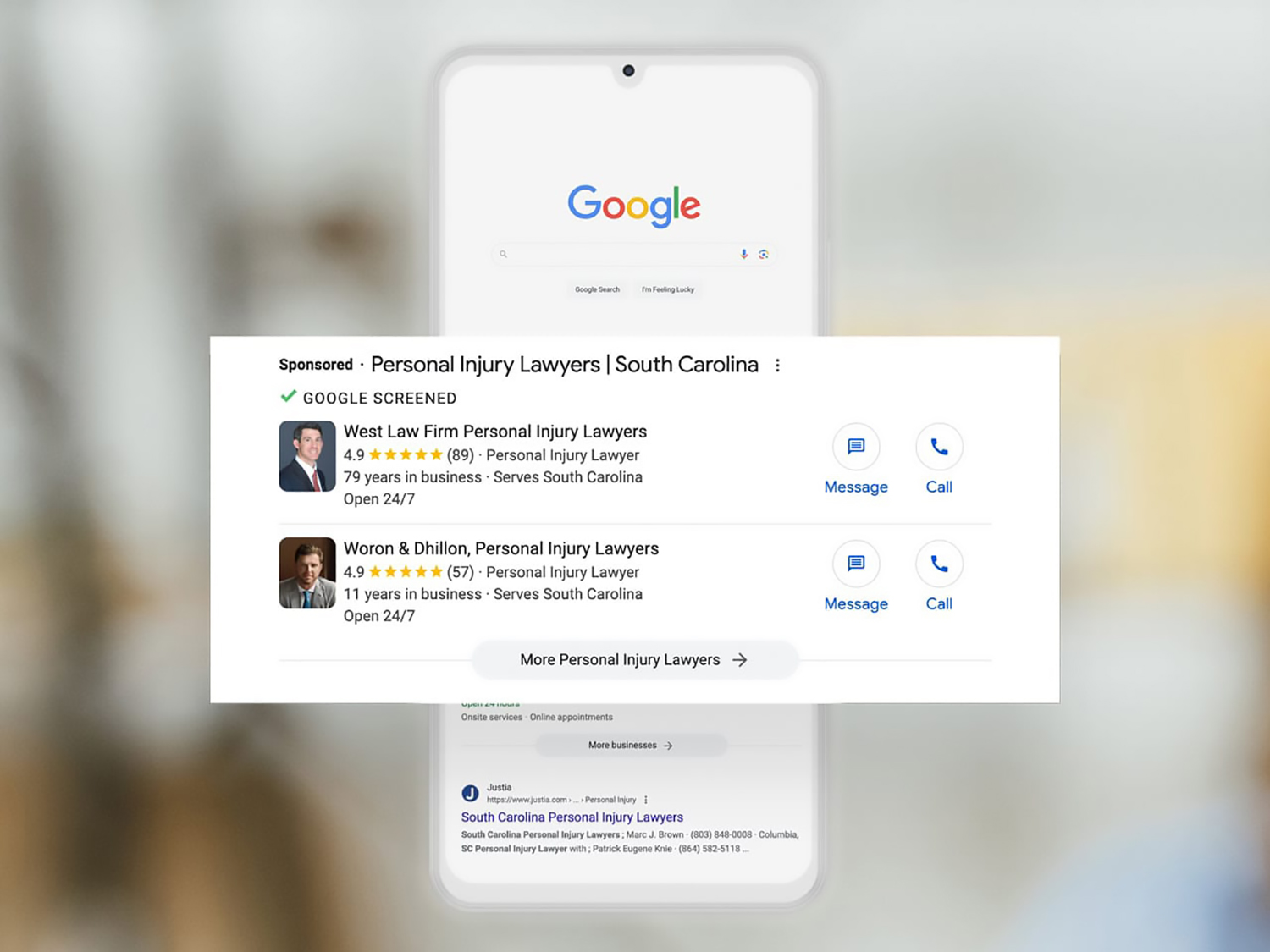
Importantly, local service ads appear above traditional search ads and are Pay-Per-Lead, not Pay-Per-Click, which is a huge advantage for ad budgets.
Leads call you directly, and you are only charged when that action has occurred. Disputing whether leads are valid may sometimes be necessary to control costs.
13. Test Responsive Search Ads (RSAs) continuously
With responsive search ads (RSAs), Google’s AI engine will automatically test combinations of headlines and descriptions (provided by you) to display the most relevant version for each user’s search query. This should improve ad conversions over time.
You can provide up to 15 headlines and 4 descriptions.
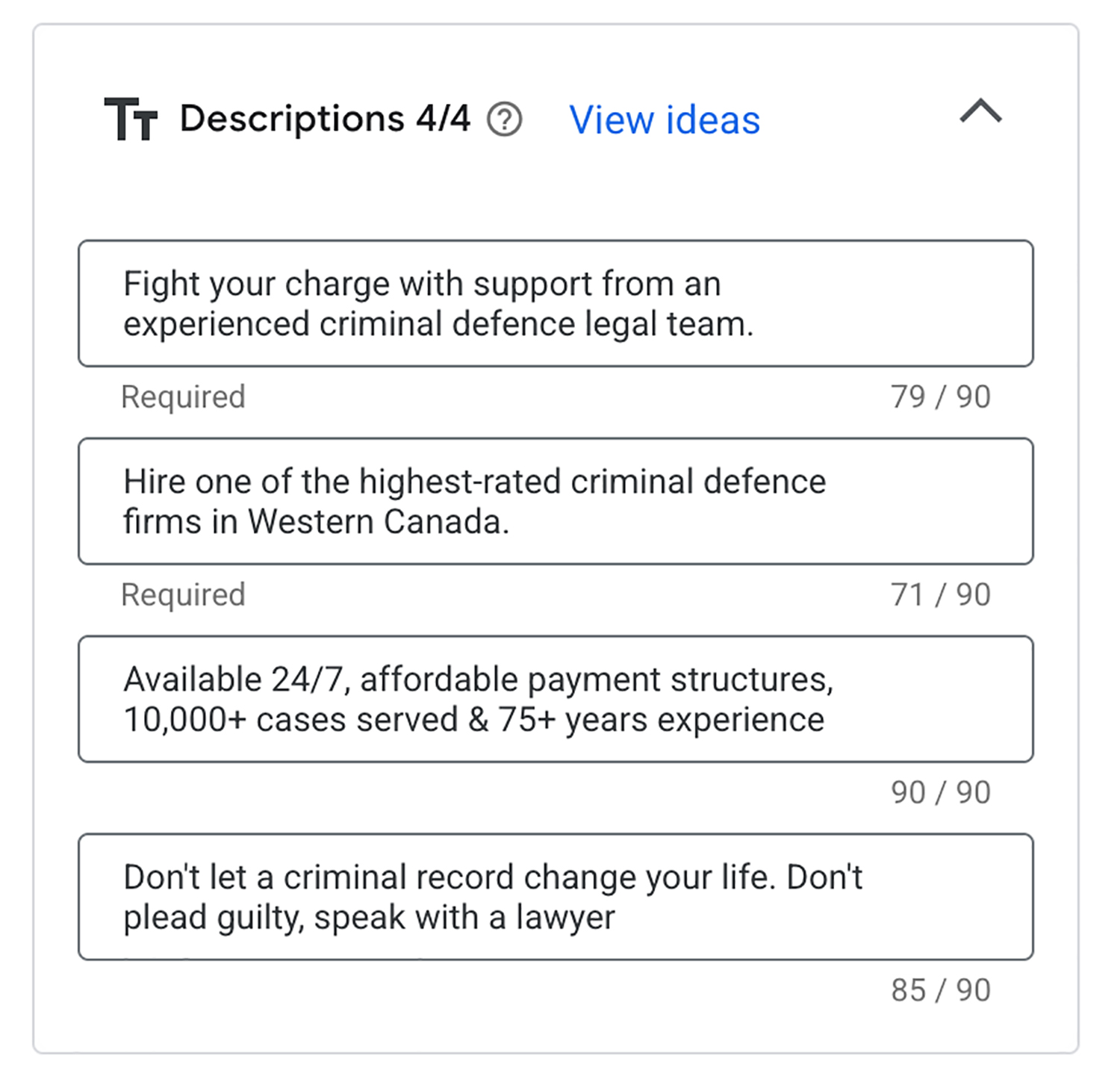
This type of ad has become highly prominent within the Google Ads landscape, which is not surprising, as many of our clients have enjoyed up to a 50-percent increase in CTR compared to standard text ads.
RSAs boost ad strength ratings and lower the cost per conversion via better Quality Scores.
14. Optimize for Quality Score
We’ve already touched on Quality Score (QS) but it’s so important, it deserves its own section.
QS is a rating of 1-10 awarded by Google. It directly impacts cost-per-click (CPC), which is a key Google Ads metric for all businesses using the platform.
A higher QS means you pay less for the same ad position, so boosting your score is essential.

You can improve your Quality Score by:
- Increasing ad relevance through tightly themed ad groups.
- Increasing your expected CTR with compelling, keyword-rich headlines and ad copy.
- Building great landing pages (fast-loading, mobile-optimized pages tailored to search intent).
15. Create dedicated, hyper-specific landing pages
Landing pages should be considered an extension of your Google ad by talking directly to the search intent that caused the user to click through to your page from the ad.
This will not only help to boost your Quality Score; it will also be more likely to convert the click into the desired action, such as Book a Consultation or Get a Free Case Review.
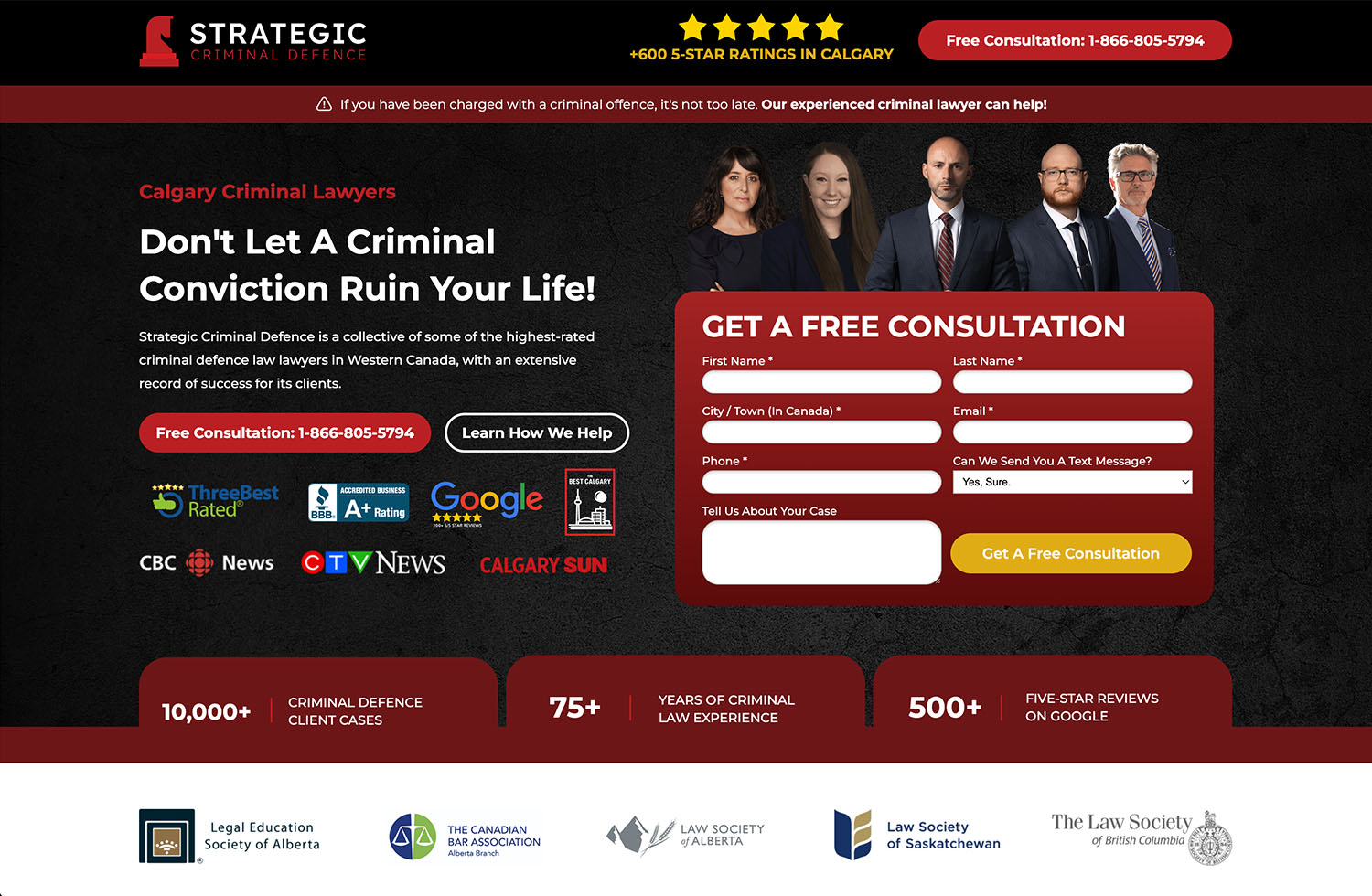
Never try to cut corners by sending traffic to your law firm’s homepage. Each ad group (e.g., DUI defense or Drug crime defense) needs a unique landing page focused only on that topic.
16. Ensure landing page messages match the ad
This cannot be stressed too much. When users click your Google Ads, they expect to read more about the topic and/or take a specific action.
So, the content of your landing pages should precisely match the ad messaging.
Expand on the headline and core message of the ad and include the same strong call to action. This helps to validate the user’s choice to click through and starts to build trust.
This is a good example of a Google Ad from Strategic Criminal Defence:
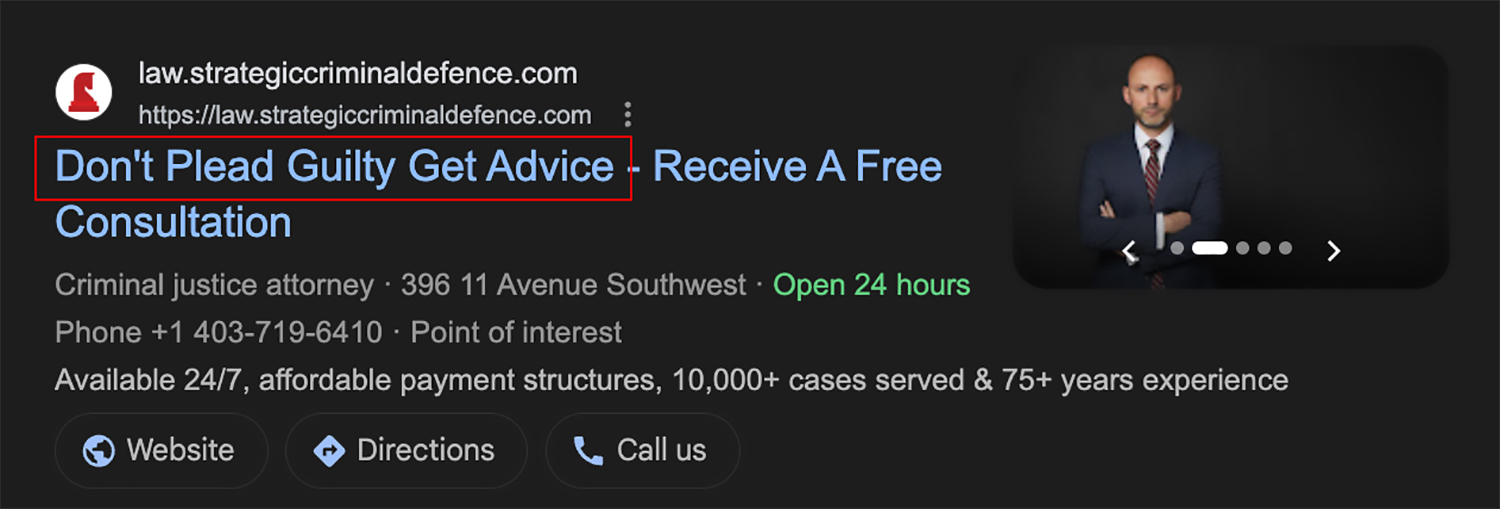
When users click through to the landing page, they see this:
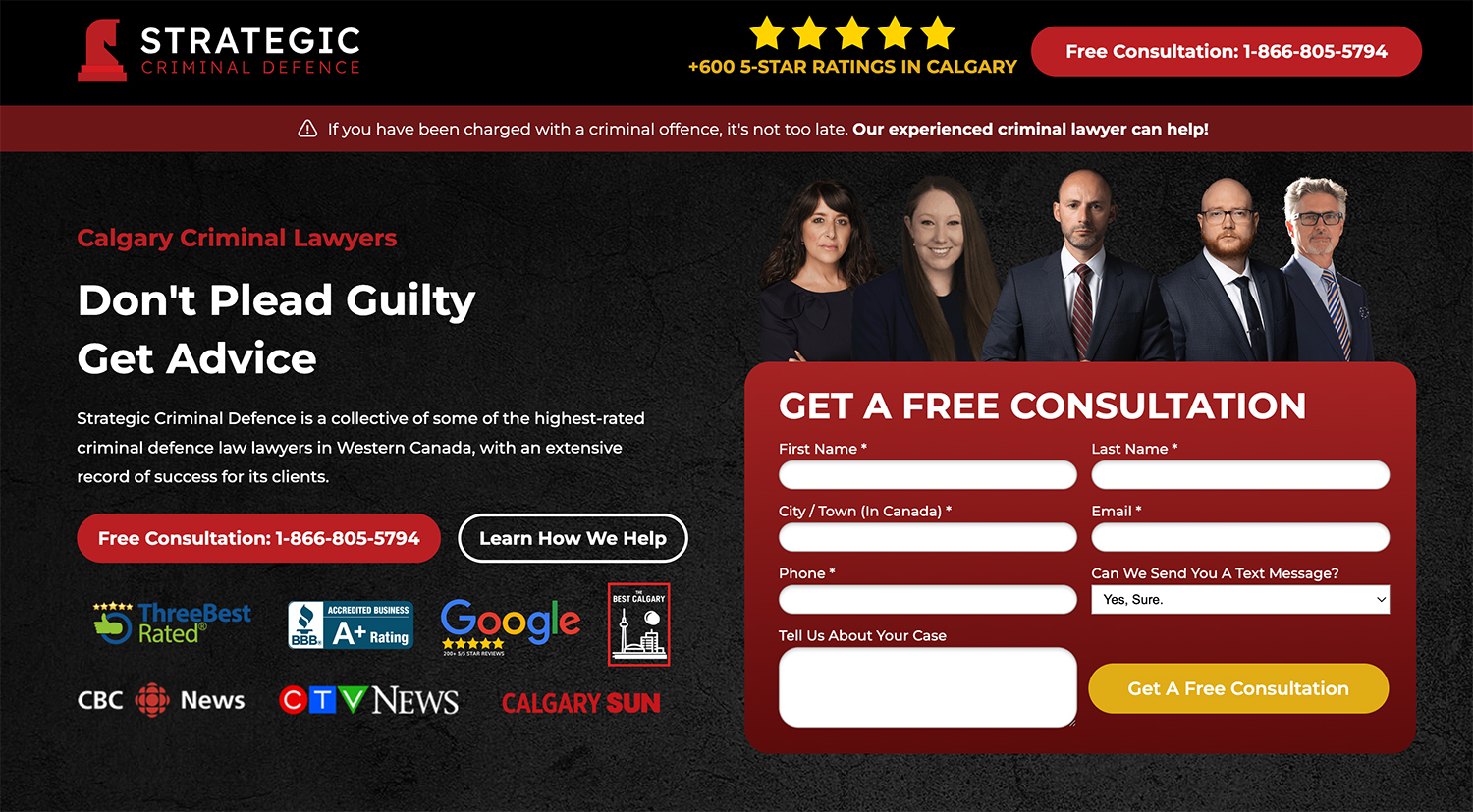
Note the perfect match of messaging between the ad and the landing page, increasing the likelihood of the user booking a free consultation.
17. Optimize landing pages for mobile speed and conversion
Most of your law firm marketing efforts should be optimized for mobile first. Google Ads for lawyers is no exception.
The majority of urgent legal searches from users with the intent to hire a lawyer happen on mobile.
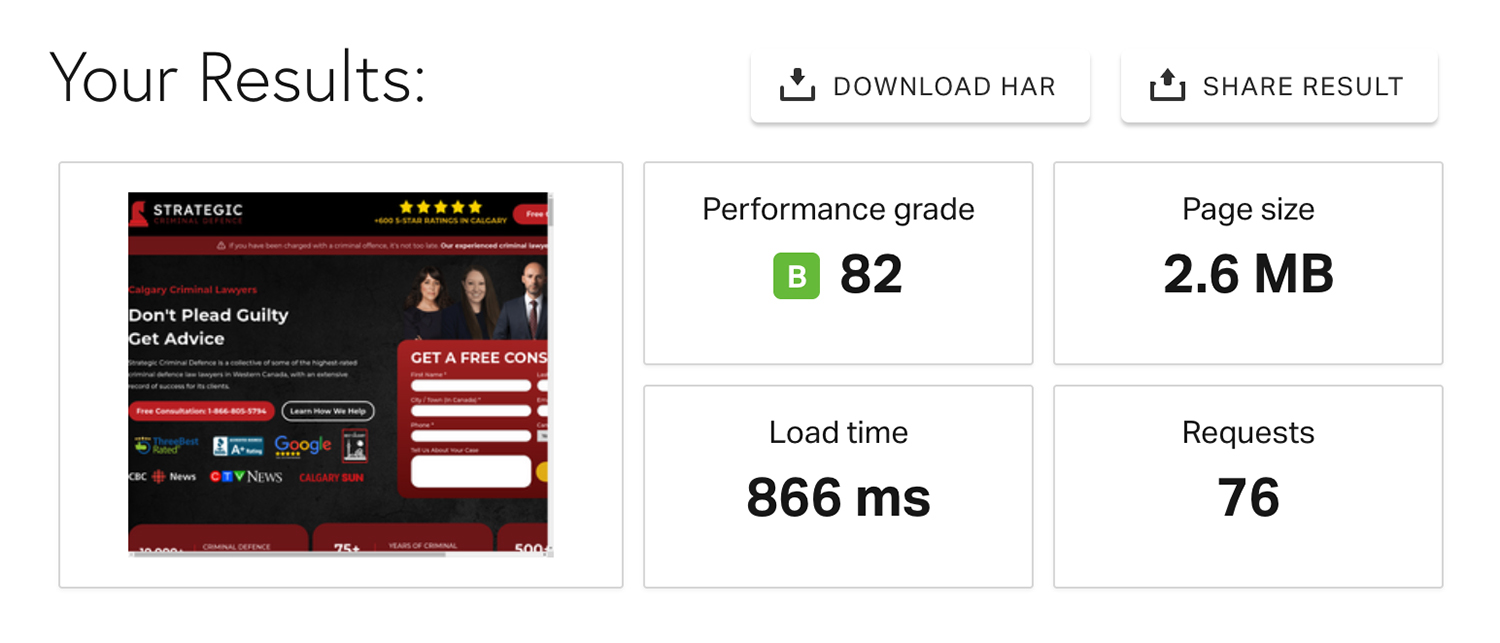
Most importantly with mobile-first optimization, make sure that your landing page loads in under two or three seconds and features a prominent, sticky Tap to Call button to make it easy to contact you.
On mobile, bear in mind that each one-second delay can cut conversions by 20 percent, according to Google itself.
18. Incorporate social proof in landing pages
Law firm marketing is increasingly becoming about demonstrating EEAT: Experience, expertise, authoritativeness, and trustworthiness.
To incorporate this on your landing pages, you should prominently feature the following:
Client testimonials
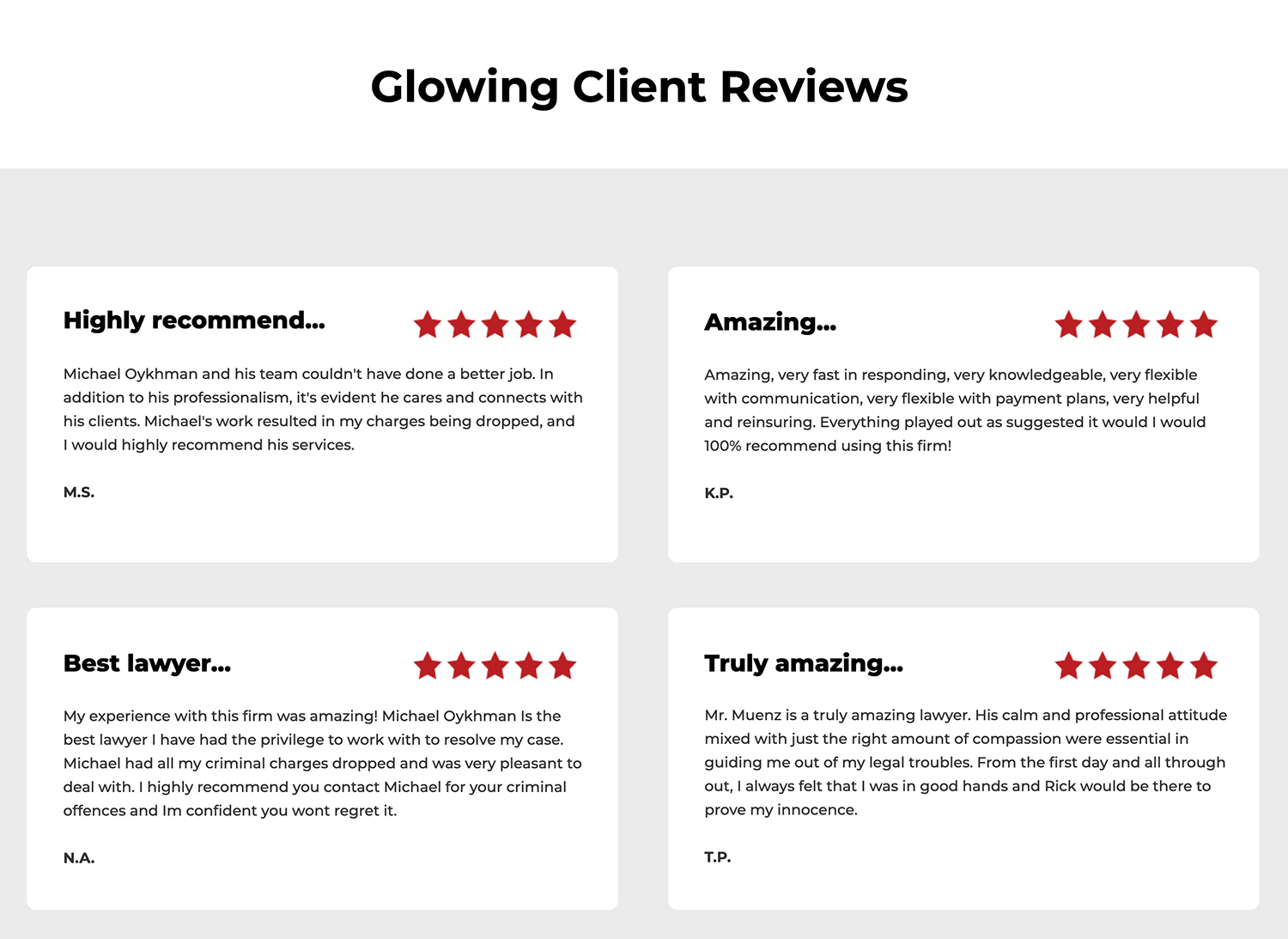
Star ratings

Bar association badges

Case results (be sure to observe the advertise rules for lawyers)
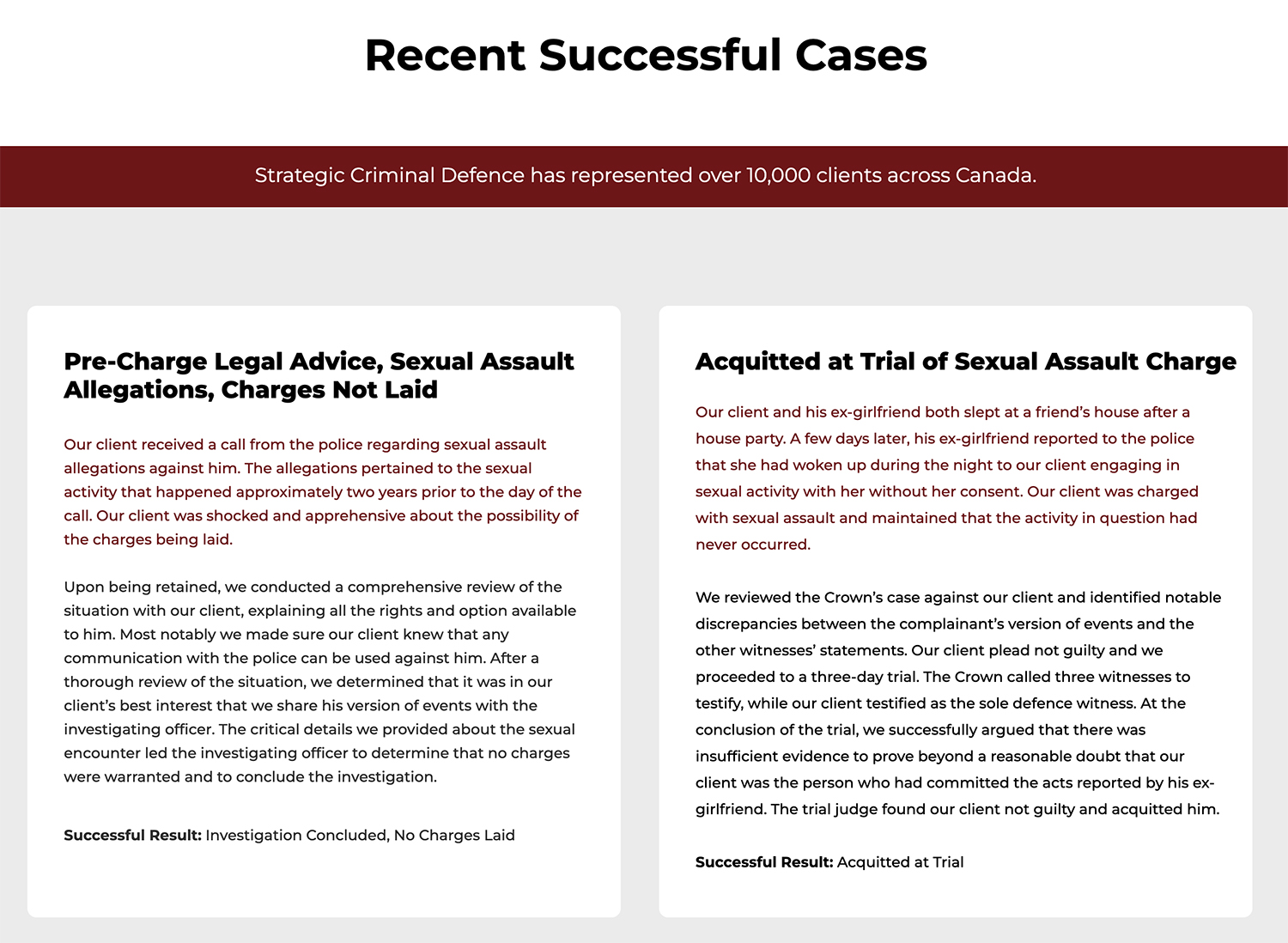
These landing page elements boost trust, credibility, and authority, making it more likely that a prospect will take the desired action.
19. Incorporate a “benefits block” in landing pages
The best law firm landing pages also include a “benefits block” at the top of the page.
This is a dedicated callout section, often using bullet points or icons, that highlights the key value propositions provided by your firm.
It usually looks like this:

This section is designed to immediately boost trust when a user clicks through from your ad. You want the user to think “Yes, I’m in the right place…these guys can help me”.
20. Integrate lead responses in your CRM
When a prospect clicks your Google Ad, goes through to your landing page, and then clicks the call to action there, it is a marketing-qualified lead.
What happens next determines whether that lead becomes a paying customer.
It’s best to have a dedicated lead-management system set up via your CRM software. For most law firms, this will be Clio Grow, Lawmatics, or similar software.
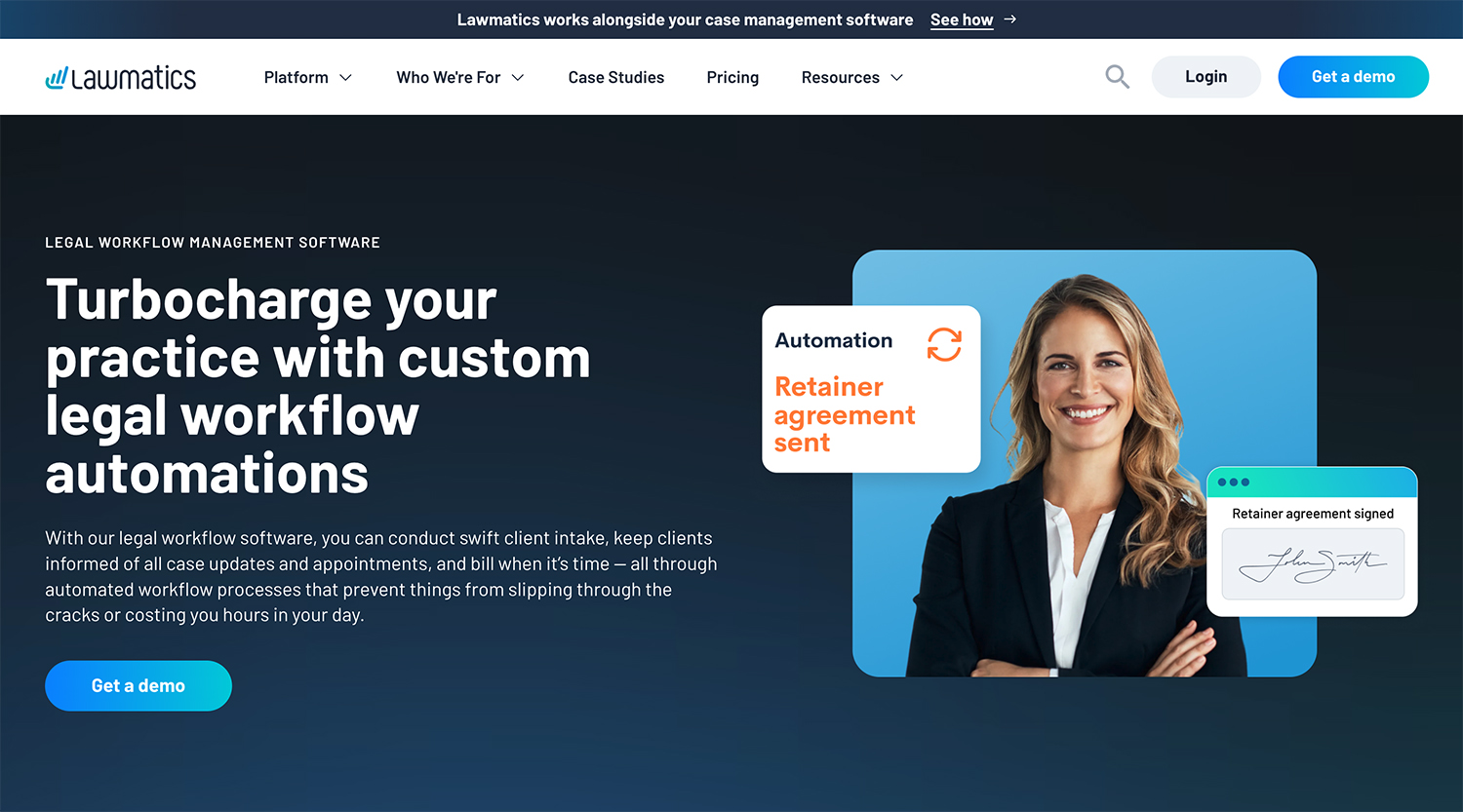
With Clio Grow and Lawmatics, you can automate the lead response process. This encourages communication with your firm, while discouraging the client from sending inquiries to competing firms. That’s better for turning leads into clients.
21. Set up comprehensive conversion tracking
Like with all marketing campaigns, Google Ads for lawyers must be monitored, tracked, and measured for return on investment (ROI).
That means primarily measuring conversions more than simply CTR, as leads are worth little if they don’t turn into paying clients.
The key metrics to track with Google Ads are:
- Submissions from contact forms.
- Phone calls (using a trackable number).
- Consultations.
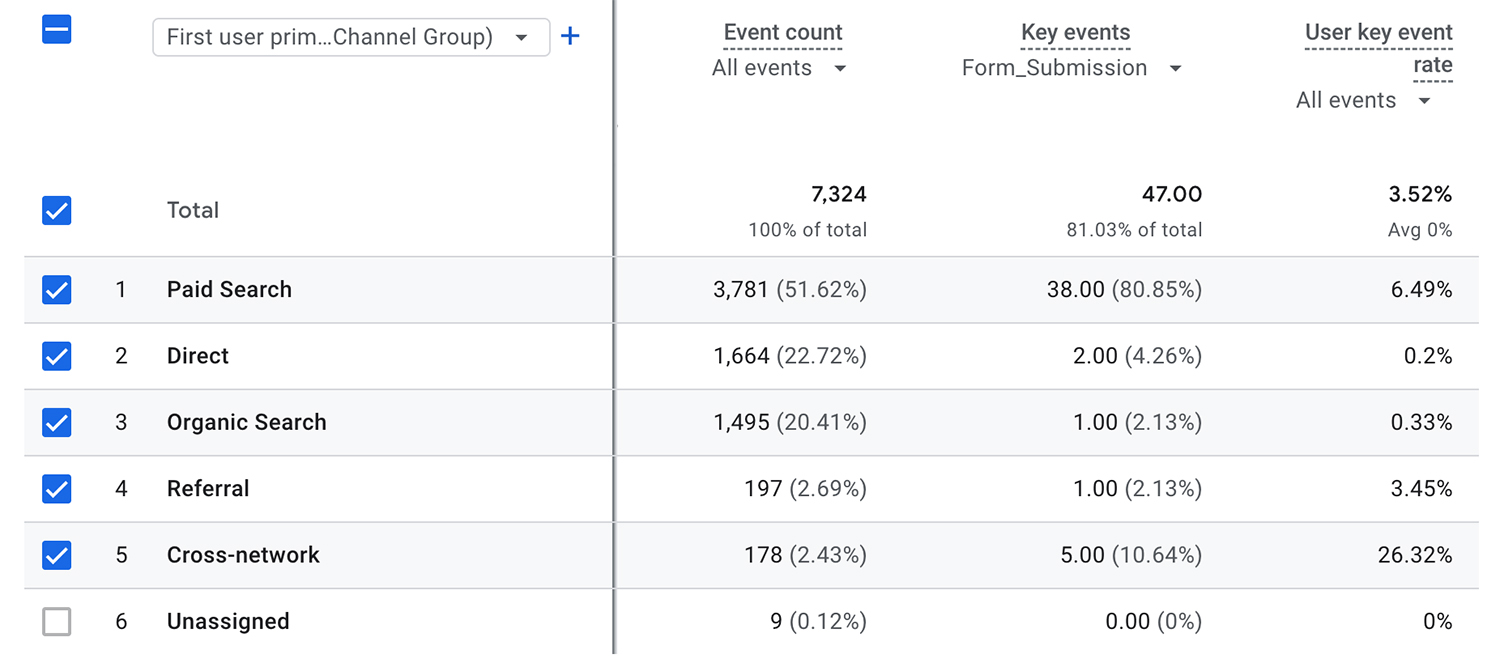
If you don’t track the lead, you can’t optimize the ad or hope for better future performance and ROI from your campaigns.
Integrating Google Ads with Google Analytics 4 and setting up conversion tracking for landing pages will help you analyze user behavior and campaign effectiveness.
22. Implement Remarketing Lists for Search Ads (RLSA)
Remarketing lists for search ads (RLSA) can help improve ROI from ad campaigns by revisiting leads who have already expressed an interest in your services. These are considered “warm leads” that convert at a much higher rate than cold ones.
By using a tracking code on your website, you can send specialized ads on platforms like YouTube to potential customers who have previously visited your website but never booked a consultation. This provides a second chance to convert them.
Bear in mind that RLSA is only available for some legal practice areas due to privacy and ethics issues.
23. Run Google Ad scheduling based on your firm’s availability
Google Ads for lawyers are only effective if someone responds to a contact form or picks up the phone when someone calls. Yet many law firms waste money on ads that generate interest outside of office hours with no one on hand to respond.
The “five-minute rule” says that contacting leads within five minutes increases conversion odds ninefold(X9).
So, you should specify when to run ads on Google Ads:
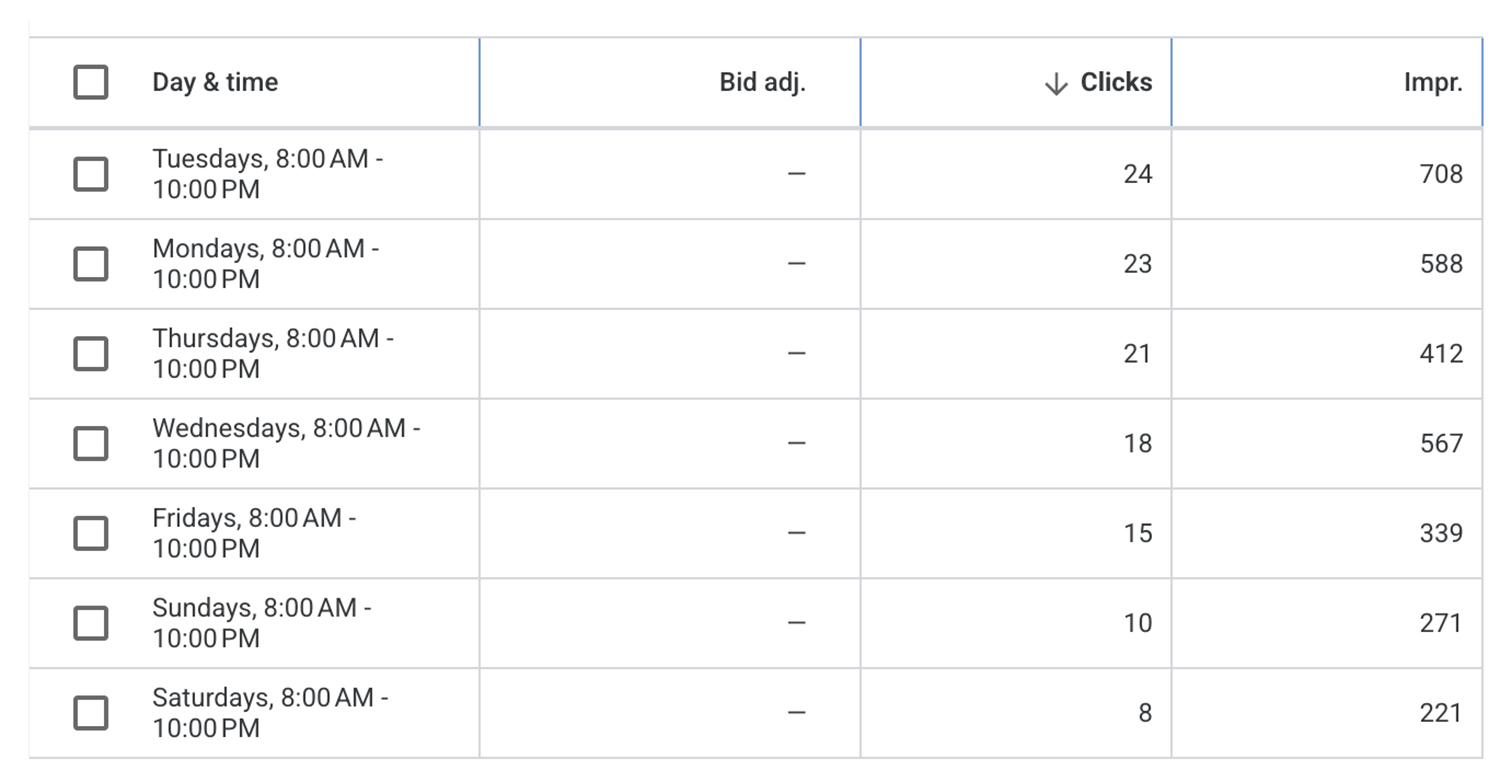
Only run ads during hours when a trained staff member is available to answer the phone or immediately respond to a lead form.
Google Ads can generate far more immediate results than search engine optimization for law firms. Many practice areas can start generating leads within a week or two with the right ad strategy in place.
However, poorly run campaigns can suffer in multiple areas, such as:
- Targeting the wrong keywords.
- Poor ad copy.
- Sending clicks to the wrong pages.
- Not optimizing for mobile.
- Not tracking conversions.
- Not implementing proper budget controls.
If you’ve had your fingers burnt before with Google Ads, there’s a second chance to reap the benefits, but it’s a specialist area that requires careful campaign strategy, management, and monitoring.
A mature Google Ads campaign takes several months of gathering data. However, it’s time well spent, as the potential rewards are huge.
Get the professional help you need to get the results you expect from Google Ads.