

Over two-thirds of small to medium-sized law firms (the vast majority of U.S. law firms) have no written marketing or business development plan, much less a set marketing budget.
Most commonly, around half of all firms spend 1-5% of their annual revenue on marketing, but that doesn’t tell the whole story.
With the growing impact of AI and “cookie-cutter” solutions, many options exist for cutting corners with marketing strategies and budgets, so it helps to know what the most successful firms are doing.
Let’s dig deeper into how you can determine a realistic law firm marketing budget and choose the right channels to target, based on our experience with firms of all sizes.
If we said the average law firm marketing budget is around $75,000 per year, it would mean little.
What matters is what your firm should spend. And that depends on:
- The size of your practice (solo attorney or small/midsize/large firm).
- Your practice area and location.
- How established your firm is.
- The level of competition in your area.
- The lifetime value of your clients.
- Your marketing goals.
- Your capacity for growth.
Some of these factors can be a mystery for some firms. It should be a major red flag if your firm has no marketing budget or runs ad hoc marketing campaigns that fail to measure ROI.
Yet this is relatively common practice.
Average law firm marketing budgets are somewhere between 2 and 15% of gross revenue. This huge range includes all firm sizes from solo attorneys trying to get established through to large, multi-location firms established for many years.
Generally, the larger and more established the law firm, the lower the percentage of revenue spent on marketing.
Let’s consider some benchmarks
Mature, established firms
More established firms that are focused on profitability rather than aggressive expansion can usually be more conservative.
New or less established firms
Newer, less established firms trying to expand often require more aggressive budgets because they cannot rely on brand equity or large referral networks.
However, in our experience:
- Many small firms still spend only around 2% of their revenue on marketing.
- That’s just $2,000 for every $100,000 in revenue.
- Marketing spend is often below the bare minimum required to grow.
Lifetime value of clients
The lifetime value of clients often affects law firm marketing budgets.
A firm with a high potential client lifetime value, such as a business law firm targeting large local companies, might justify a higher marketing budget.
Only about 47% of law firms reported having an annual marketing budget in 2023. Amazingly, that was actually down from 57% in 2022!
Larger firms (100+ lawyers) are far more likely to set a marketing budget, with fewer than 10% of solo firms and only about one-third of small firms doing so.
So, despite marketing budgets being crucial, the message doesn’t seem to be hitting home.
Setting a budget:
- Moves the firm away from hit-and-miss DIY marketing.
- Allows for a targeted and measurable strategy.
- Enables controlled investment in the right professionals and the right marketing channels.
The alternative to setting a law firm marketing budget and closely tracking spend and results is an ad hoc and unmeasured approach, which is generally a good recipe for losing money.
So, once you’ve allocated a budget, where do you start spending it?
There’s no one answer to where your marketing spend should be going, but:
- Established firms will want both client acquisition marketing and client retention campaigns.
- Newer firms will be almost entirely focused on client acquisition.
Digital marketing channels are the most affordable for both, offering excellent ROI if managed well, so that’s where most new and unestablished firms will start.
- Around 65% of law firms spend most of their budget on digital marketing.
- 40% of law firms spend 76-100% of their marketing budget on online marketing.
This is a good initial breakdown of the various marketing channels and recommended spend:
| Marketing Channel | Purpose | Typical Budget | Notes |
|---|---|---|---|
| Web Development | The “hub” of all marketing activity. | $5,000-$25,000 (initial build for small/mid-size firm) + ongoing costs. | Essential for an eye-catching, scalable site. |
| Search Engine Optimization | Ensuring the website ranks prominently on search engines (SERPs). | $3,000-$7,500 per month (moderate markets); up to $25,000+ per month (competitive areas). | Required for organic and local search visibility. |
| Content Marketing | Foundation for brand awareness, SEO, and other channels (blogs, eBooks, practice pages). | 20–50% of total budget; $2,000-$10,000 per month. | Ongoing commitment to educating the target market. |
| Social Media Marketing | Increasing visibility and getting eyeballs on content. | $1,000-$2,000 (managed profiles/paid ads). | 77% of lawyers use social media professionally. |
| Google Ads/Paid Advertising | Quick, high-volume, quality leads (PPC). | $1,500+ per month (including ad spend) for professionally managed campaigns. | Legal keywords are highly competitive/expensive. |
| Email Marketing | Nurturing leads and converting interest into paying clients (high ROI). | $1,000 per month (professional management). | Focus on audience segmentation and testing. |
| Branding | Website re-launch, logo development, market research. | $5,000 (for fixed-fee rebranding projects). | Separate from regular marketing work. |
| Event Marketing/Networking | Professional networking, seminars, webinars, and public speaking. | Digital events can cost a few thousand dollars; offline events can be tens of thousands. | Focus may shift from offline to digital events/webinars to reduce cost. |
The precise focus of your marketing budget spend will depend greatly on:
- How established your firm is.
- Your firm’s stage of growth.
- Your practice area and location.
For instance, established businesses will generally focus more on:
- Client retention.
- Referral programs.
- Email marketing, etc.
This established employment law firm in Los Angeles includes a dedicated referrals page on its website:

New or less-established firms will need to focus more on:
- Developing the website.
- Brand awareness campaigns.
- SEO.
- Social media.
A firm’s practice area greatly affects marketing spend, too.
- Personal injury, family, or estate planning lawyers need a steady flow of leads, and should focus on
- Developing the website.
- Content marketing.
- SEO.
- Criminal defense firms seeking immediate clients might focus on:
- Google Ads for lawyers.
- Other Pay-Per-Click (PPC) or Pay-Per-Lead channels.
Here’s a good breakdown of spend recommendations for the main marketing channels by some key practice areas (bear in mind that your law firm’s stage of growth and level of establishment will affect these estimates):
| PRACTICE AREA | SEO (Including Content Marketing) | GOOGLE ADS & PAID ADVERTISING | SOCIAL | TRADITIONAL ADS |
|---|---|---|---|---|
| Criminal Defense | 50% | 35% | 10% | 5% |
| Personal Injury | 30-40% | 40-50% | 10-15% | 10-15% |
| Family & Estate Law | 40-50% | 20-25% | 15-20% | 10-15% |
| Business Law | 50-60% | 20-25% | 5% | 5-10% |
| Overall | 45% | 35% | 10% | 10% |
The digital dominance means that most law firms starting out can focus 100% on these channels.
However, we should recognize that offline channels like bus bench ads and billboards are still favored by some firms, especially personal injury lawyers:

Midsize and larger firms generally invest more heavily in a mix of traditional and digital strategies.
You can see many examples of the most effective marketing tactics in our law firm marketing strategy article but, for now, let’s take a quick look at each of the main online marketing channels to focus marketing spend on.
Website development
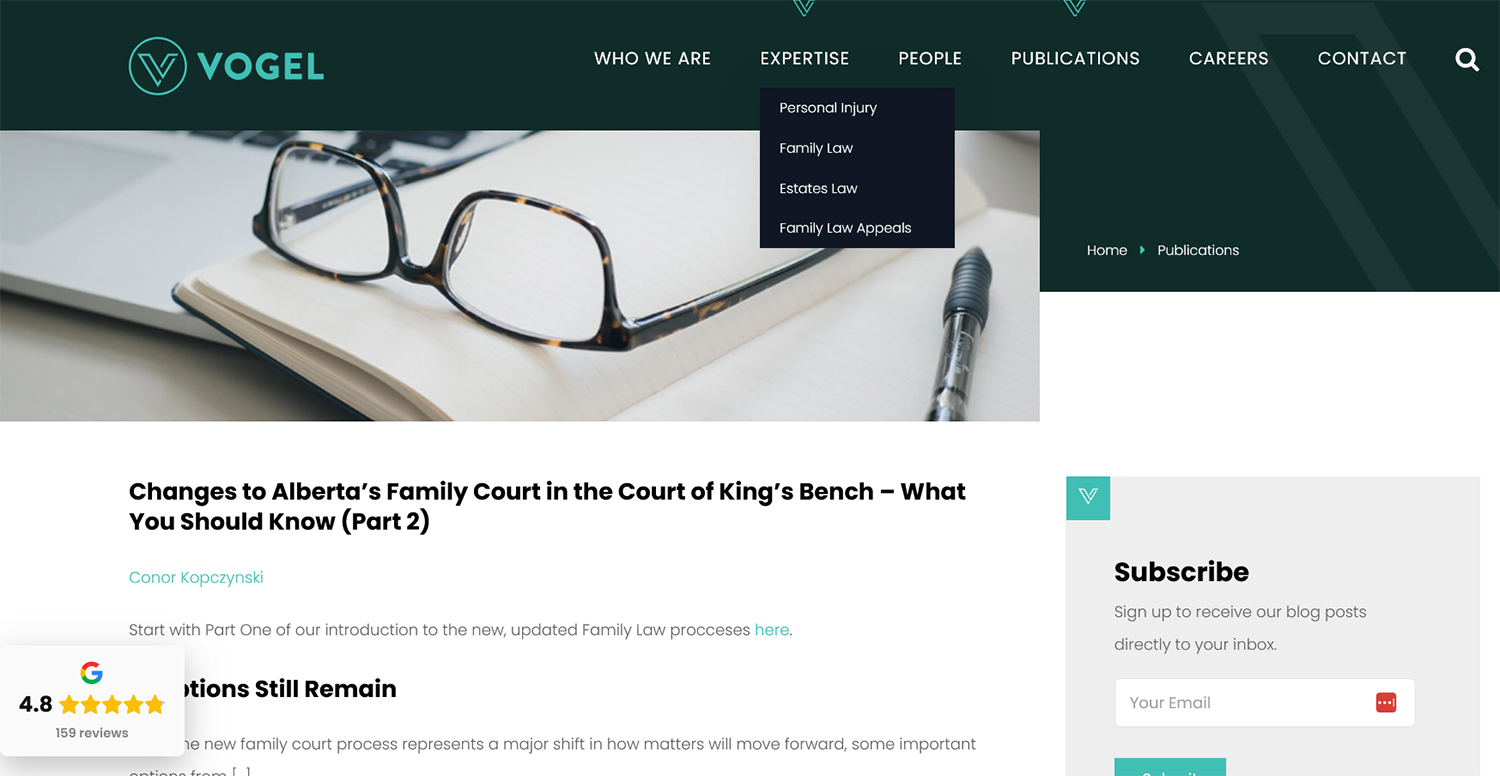
As the hub of all your marketing activity and a key tool for growing your business, don’t skimp on your website.
Focus on making your website:
- Mobile-first
- Easy to use
- Informative
- Scalable
Here’s a great example:
Recommended website budget:
- $5,000–$25,000 (plus ongoing costs of a few thousand dollars per year).
SEO
Budgeting heavily for Search Engine Optimization (SEO) helps ensure that your target audience can find you online by earning prominent website rankings in the search engine results pages (SERPs).
SEO takes time and generally requires help from SEO professionals who understand the legal markets.
Recommended SEO budget:
- Small to mid-size firms in moderately competitive markets: $3,000-$7,500 per month.
- Highly competitive markets: $7,500-$25,000 per month or more.
- Uncompetitive areas/markets: Under $1,500 per month.
Content marketing
Content marketing is one of the mainstays of:
- Websites
- SEO marketing
- Email marketing
- Social media marketing
A continuing commitment to creating high-quality content helps firms build EEAT (Experience, Expertise, Authoritativeness, and Trustworthiness) and keep target audiences informed.
Focus on building a resource library of informative:
- Articles
- Guides
- FAQs
- eBooks
- Videos
This leading criminal defense firm in Canada has built a resource center of over 200 in-depth articles based on FAQs:

Recommended content marketing budget:
- Most average mid-size firms should spend $2,000–$10,000 per month on content marketing (20-50% of the total annual marketing budget).
Google Ads and paid advertising
78% of law firms use paid search marketing (PPC), such as Google Ads or Facebook Ads, and the majority outsource these efforts to professionals.
Depending on your practice area and growth stage, well-managed PPC campaigns can be highly effective lead generators for law firms.
The high lifetime value of legal clients and the frequent need for people to hire lawyers immediately can justify a significant spend and drive successful campaigns.
This is especially the case for practice areas like:
- Personal injury (car accident, workers’ comp).
- Criminal defense (DUI, etc.)
- Family law (custody, divorce).
- Bankruptcy.
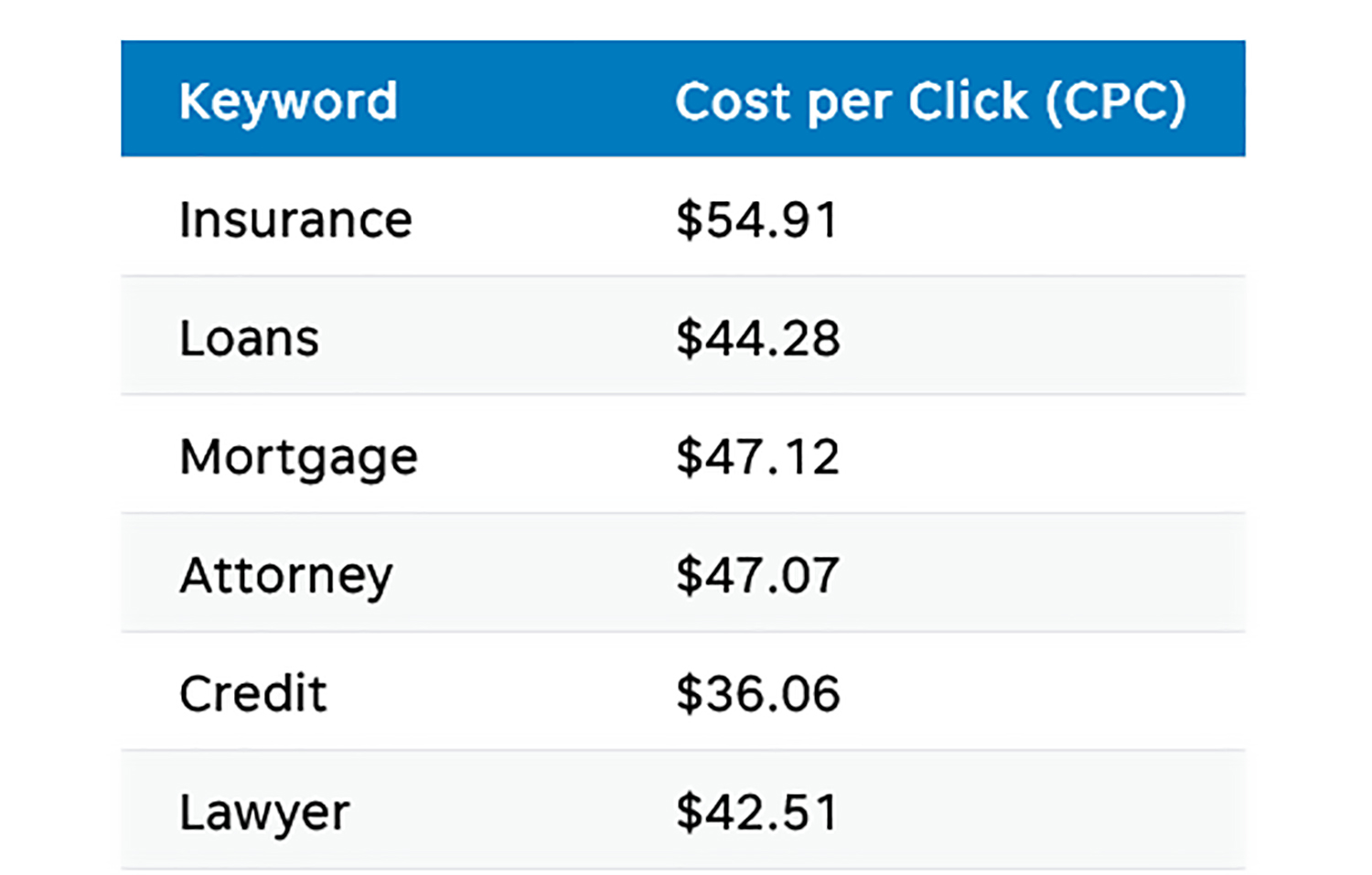
Be aware that legal search times are some of the most competitive (and expensive) around, so your strategy needs to be well-honed:
Recommended paid advertising budget:
- At least $2,500+ per month for managed campaigns, including ad spend, but highly practice area dependent
- $5,000+ per month is more typical.
Social media marketing
We should not overlook the huge opportunity provided by social media platforms to reach the target audience’s eyeballs via content feeds and paid advertising.
Focus on the following:
Most lawyers use social media in some form privately, and 80% of firms now use social media for marketing.
Recommended social media marketing budget:
- Managed profiles with paid advertising: $1,000–$2,000 per month.
- Some firms freely use social media without it costing a cent.
Email marketing
Email marketing has one of the highest returns on investment (ROI) among digital marketing channels across all industries: around $36 to $42 for every $1 spent.
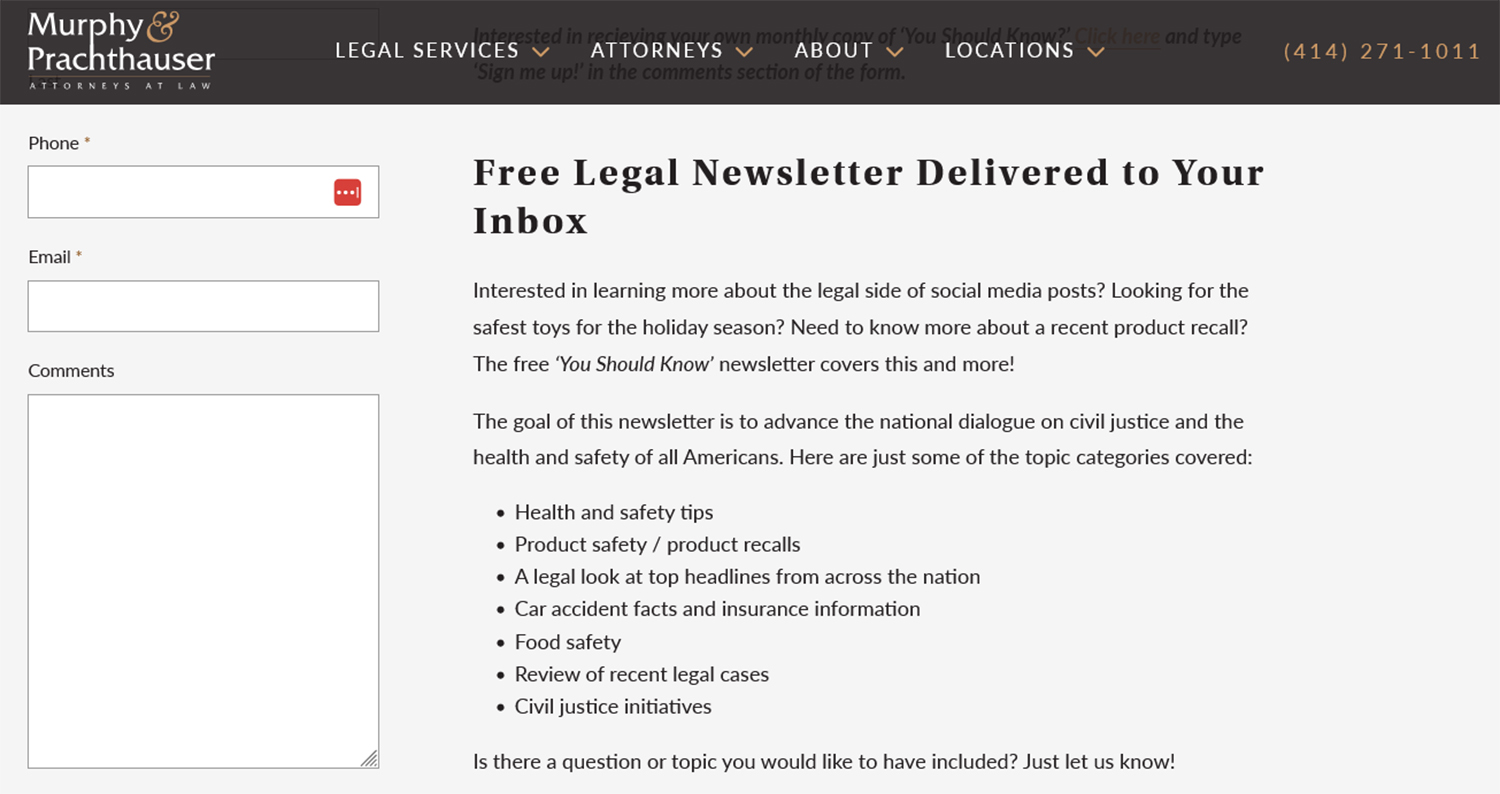
For lawyers, it’s a lesser-used channel compared to the other strategies covered here but it shouldn’t be ignored. Email marketing can help to educate audiences, nurture leads, and stay top-of-mind with prospects.
Recommended email marketing budget:
- $1,000 per month or around $10,000 per year for a professionally managed campaign.
Branding
Putting a budget on law firm branding is difficult, as many marketing strategies contribute to a firm’s brand awareness.
Relaunching a website, developing a new logo, or performing market research often requires a separate budget from regular marketing campaigns.
Recommended email marketing budget:
- Usually charged by the hour, depending on the type of work.
- $5,000 is a good estimate for fixed-fee rebranding projects.
Event Marketing and Networking
Professional networking events arranged offline can run to tens or even hundreds of thousands of dollars of marketing spend, including event space hire, travel, printed media, etc.
Local events can be scaled back for small or midsize firms looking to do a little offline PR, with seminars and public speaking common practice.
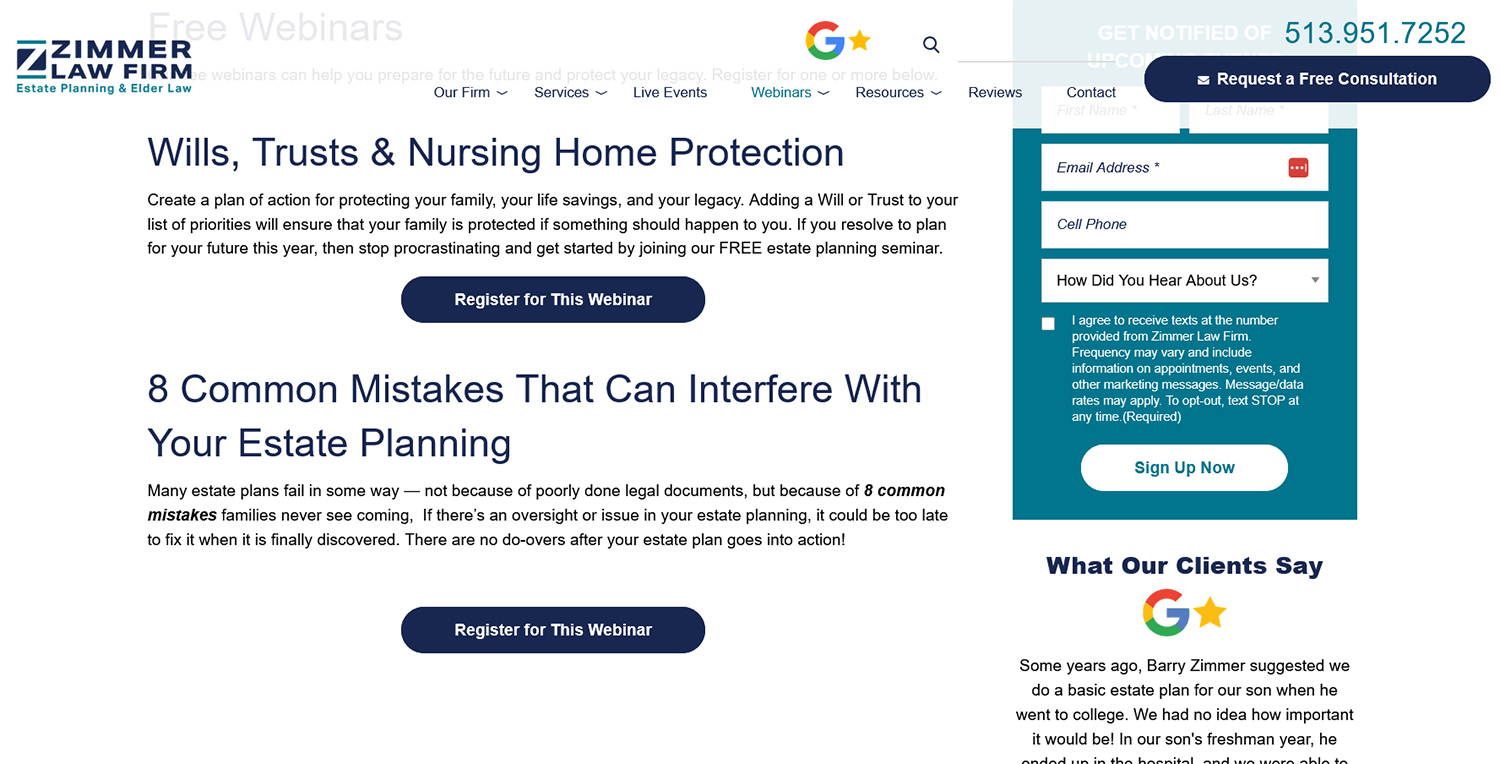
This estate planning and elder law firm has a dedicated page on its website for its webinars, which is an online form of event marketing:
Recommended even marketing/networking budget:
- Digital events: a few thousand dollars.
- Offline events: tens of thousands of dollars.
Most law firms don’t know:
- How much they’re spending on marketing.
- The return on investment.
- The cost per lead.
- Other important metrics.
Unless you actively set a marketing budget and track spend and other metrics, these numbers will remain a mystery.
What you should spend on marketing varies with firm size, practice area, growth goals, etc. Between 2 and 10% of revenue is reasonable for most lawyers reading this.
An established estate planning firm in a small town in upstate New York will generally need to spend considerably less of its revenue on marketing than a startup personal injury firm in Manhattan.
The figures need to be adjusted, therefore, depending on the specifics. For instance, let’s say your firm is:
- Unestablished or starting up.
- Operating in a highly competitive practice area.
- Operating in a highly competitive urban area (e.g., NYC).
- Targeting high lifetime value clients.
- Targeting aggressive growth.
In such cases, 15–20% is a more realistic cut of revenue for marketing spend than 2-10%.
How do you calculate your firm’s marketing budget?
To arrive at a reasonable figure for your marketing budget, consider the above factors (including your growth targets) AND estimate:
- The number of leads you need.
- The value of each lead.
- The acceptable cost to acquire that lead.
Not every strategy you employ will be successful but budgeting requires you to assess what expectations are reasonable.
Ultimately, a firm looking to increase revenue by hundreds of thousands of dollars should be prepared to spend tens of thousands on marketing to win the necessary number of clients.
Several marketing budget estimation tools and budget templates can help you track spending and estimate the required budgets.
To make the most of your marketing budget, follow a few basic tips based on our work with numerous law firms’ marketing projects over the past 15 years or so:
Set SMART goals
SMART goals are:
- Specific
- Measurable
- Achievable
- Relevant
- Time-bound
A good example that ticks all of the above is this:
- Specific: Focuses on organic search leads for criminal defense.
- Measurable: 30% increase, top 3 rankings, 5% conversion rate.
- Achievable: Uses proven tactics (SEO pages + local SEO).
- Relevant: Directly tied to revenue-driving case inquiries.
- Time-bound: 6-month deadline.
As you can see, SMART goals clearly define marketing objectives and make them measurable.
Beware of false economies
Law firm marketing can shape the future health of your business, so assigning it to a junior assistant is inadvisable and may be a false economy.
Dedicated professionals should manage SEO, paid ads, content marketing, website design, etc., and be accountable for results. Results are all that matter at the end of any marketing campaign.
Measure and track results
Only around 20% of law firms receive regular reports of marketing performance.
Whether it’s SEO, paid ads, content marketing, or another element of your marketing, report data will tell you which strategies work, which don’t, and what needs to be adjusted.
A CRM system that can manage leads like Clio or Lawmatics, along with Google Analytics 4, will help you fine-tune the strategy.
The best law firm marketing budgets spend just enough to get the desired results.
That‘s different for every law firm, which is why a comprehensive and personalized solution using the most effective channels is required.
Digital marketing is most effective when properly budgeted, professionally structured, and closely managed and monitored for results.
That’s where Inbound Law Marketing comes in.
We provide the professional help you need to get the results you expect from your marketing efforts.